
Description
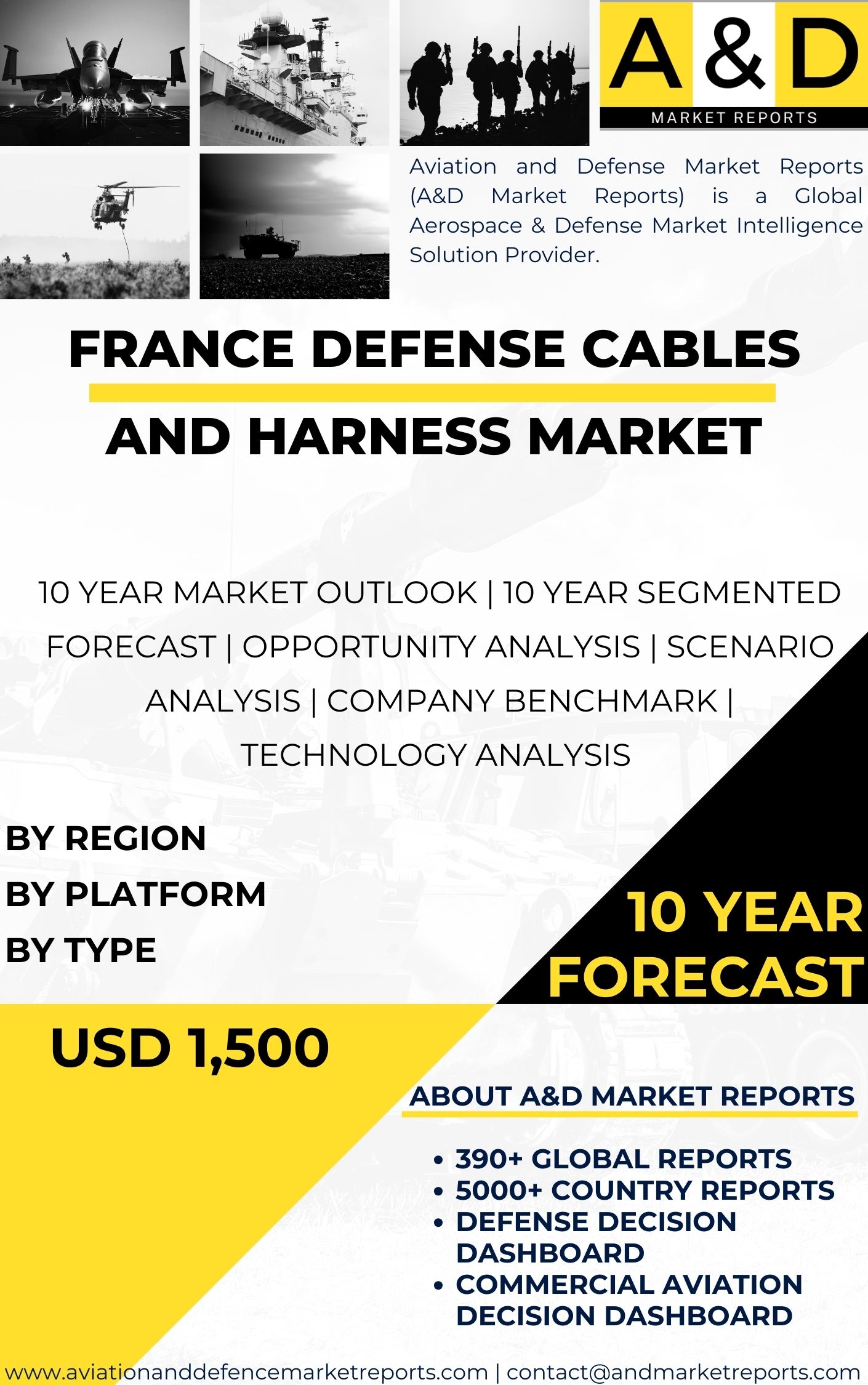
Overview of the Defense Cables and Harness Market in France
The France Defense Cables plays a critical role. First, it supports every major defense platform. Although often overlooked, cables enable system functionality. Moreover, they connect power, data, and control units. As a result, reliability depends heavily on them. French defense engineering values precision at every level. Therefore, even small components receive strict attention. In addition, quality standards remain very high. Consequently, this segment is treated as strategically important. Overall, cables form the backbone of defense systems.
Historical Evolution and Market Development
Historically, cable and harness technology evolved alongside defense systems. Initially, simple analog systems required basic cabling. However, digitalization changed requirements significantly. As a result, complexity increased over time. Moreover, avionics and communications drove specialization. France’s NATO and European roles reinforced this shift. Therefore, interoperability became essential. In response, local suppliers upgraded capabilities. Consequently, domestic expertise expanded steadily. Overall, history shaped today’s advanced solutions.
Key Industry Players and Supply Chain Structure
Several French and European firms dominate this market. First, they supply major defense primes. These include Airbus, Dassault, Naval Group, and Thales. Moreover, Safran and Nexter rely on them heavily. In addition, smaller firms provide niche solutions. These companies focus on mission-specific systems. As a result, the supply chain remains layered. Furthermore, European partnerships strengthen resilience. Consequently, France maintains strong domestic control. Overall, collaboration defines the ecosystem.
Technical Characteristics and Performance Requirements
French defense harnesses must meet extreme standards. First, they must withstand harsh temperatures. Moreover, they resist vibration and shock. In addition, electromagnetic shielding is essential. Aircraft systems require lightweight designs. Meanwhile, naval systems demand corrosion resistance. Land platforms need durability and flexibility. Therefore, customization is common. Also, advanced materials improve performance. As a result, engineering precision remains central. Overall, technical rigor defines the market.
Economic Role and Industrial Importance
Economically, this market supports the wider defense sector. First, platform deliveries depend on reliable cabling. As a result, delays can disrupt schedules. Moreover, long service lives drive aftermarket demand. Maintenance and replacement generate steady revenue. In addition, export platforms create long-term ties. Support contracts extend for decades. Therefore, cables strengthen industrial relationships. Also, they stabilize supply chains. Consequently, their impact exceeds visibility. Overall, they enable defense efficiency.
Technology Trends and Digital Transformation
Technology trends strongly influence this segment. First, data rates continue to rise. As a result, harnesses must handle more information. Moreover, electrification increases power demands. In response, suppliers pursue lighter cables. Fiber optics gain wider adoption. In addition, hybrid power-data systems emerge. Digital tools now aid design and testing. Therefore, errors reduce early. Consequently, efficiency improves across programs. Overall, innovation reshapes development processes.
Sustainability and Environmental Focus
Environmental concerns now affect cable design. First, regulations limit hazardous materials. As a result, suppliers seek safer alternatives. Moreover, recyclable components gain attention. Energy-efficient manufacturing becomes important. In addition, greener materials reduce lifecycle impact. France aligns these efforts with EU policy. Therefore, sustainability complements sovereignty goals. Also, exports benefit from compliance. Consequently, eco-design gains momentum. Overall, sustainability shapes future development.
Military Platform Applications
Military demand drives the market strongly. Fighter aircraft require dense avionics cabling. Naval vessels need long-life corrosion-resistant systems. Armored vehicles demand rugged battlefield solutions. Missiles rely on ultra-precise lightweight harnesses. Moreover, electronic warfare systems increase complexity. Each platform imposes unique constraints. Therefore, customization remains unavoidable. In addition, integration accuracy is critical. As a result, testing standards stay strict. Overall, application diversity sustains demand.
Maintenance, Repair, and Overhaul (MRO)
MRO plays a vital supporting role. First, harnesses degrade over time. As a result, replacement becomes necessary. Mid-life upgrades often require re-routing. Moreover, standardized designs simplify repairs. Field teams depend on rapid replacement kits. Predictive maintenance is also emerging. Embedded diagnostics help detect wear early. Therefore, downtime reduces significantly. Consequently, operational readiness improves. Overall, MRO extends system life.
Challenges and Risk Factors
The market faces several challenges. First, innovation increases development costs. As a result, qualification becomes expensive. Moreover, raw material supply can fluctuate. This creates supply chain risks. Cybersecurity also raises new concerns. Data-carrying cables need protection. Therefore, anti-tamper designs gain importance. European cooperation helps mitigate risks. Consequently, resilience improves over time. Overall, balance remains essential.
Strategic Importance and Future Outlook
Strategically, cables symbolize defense interdependence. No platform functions without them. France recognizes this reality clearly. Therefore, sovereignty remains a priority. Precision engineering traditions support long-term strength. As systems become more electric, demand will rise. Networking and modularity will expand further. Consequently, innovation will accelerate. The sector will gain visibility. Overall, cables remain silent enablers of power.