
Description
Overview of INS Automated Test Equipment in France
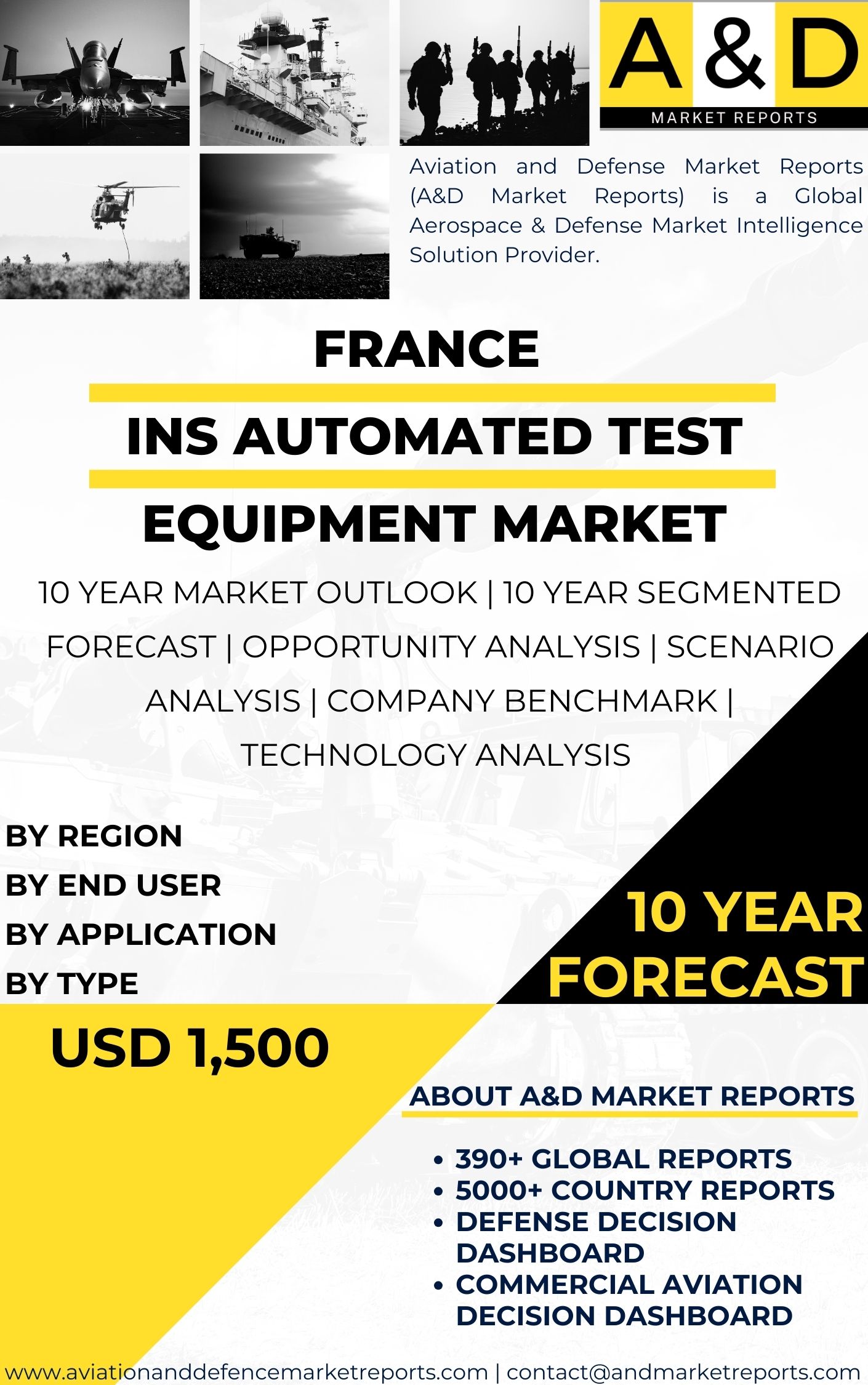
INS automated test equipment occupies a highly specialized and strategically important position in France’s aerospace, defense, and advanced manufacturing sectors. Inertial navigation systems provide precise navigation, guidance, and control without relying on external signals such as GPS. Therefore, they are essential for aircraft, submarines, missiles, spacecraft, and land vehicles operating in contested or denied environments. Automated test equipment ensures the accuracy, reliability, and operational readiness of these systems. In France, this capability has evolved through a combination of advanced engineering, government-backed investment, and industrial integration. As a result, INS test equipment functions not only as hardware but also as a comprehensive platform for diagnostics, validation, simulation, and lifecycle support.
Historical Foundations and Strategic Drivers
The origins of France INS Automated Test trace back to the Cold War era. During this period, France pursued independent capabilities in aviation, naval forces, and strategic missile systems. Inertial navigation became central to this effort because it offered secure and self-contained positioning without foreign dependence. As defense programs matured, particularly in nuclear submarines and missile deterrence, accuracy and long-term stability became critical. Consequently, demand grew for automated test systems that could verify alignment, calibration, drift behavior, and long-duration performance. French aerospace and naval industries collaborated closely with government research centers and engineering schools to develop indigenous test solutions. Over time, these capabilities expanded into civil aviation and space programs, creating a dual-use market grounded in sovereignty and technical excellence.
Technical Characteristics and System Capabilities
Precision, reliability, and adaptability define the French INS automated test equipment market. These systems simulate wide ranges of motion, vibration, and environmental stress to reflect real mission conditions. They integrate hardware, advanced software models, and high-resolution data acquisition to evaluate parameters such as bias stability, gyro drift, scale factor errors, and accelerometer accuracy. Moreover, France’s market spans multiple technology generations. It supports legacy mechanical and optical gyroscopes as well as modern MEMS, fiber optic, and ring laser gyroscopes. Automation plays a central role by reducing operator involvement, increasing test throughput, and improving repeatability. In addition, adaptability allows systems to meet diverse platform requirements, from long-endurance submarine navigation to high-dynamic fighter aircraft operations.
Industrial and Research Ecosystem
A strong and collaborative ecosystem underpins INS automated test equipment development in France. Major aerospace and defense contractors integrate inertial navigation systems into aircraft, naval vessels, and missiles. They work closely with specialized companies that design precision automated test solutions. These partnerships often span decades and align with national defense objectives. Furthermore, research institutions and engineering schools contribute expertise in navigation algorithms, sensor physics, and precision mechanics. National laboratories have played a key role in advancing calibration techniques and error modeling. Digital engineering firms add another layer by providing software frameworks for complex scenario simulation, including space missions, missile trajectories, and maritime navigation. Together, this ecosystem ensures sustained innovation and global competitiveness.
Economic and Strategic Importance
INS automated test equipment delivers strong economic and strategic value in France. In defense, it ensures the performance of strategic platforms such as ballistic missile submarines and advanced combat aircraft. Even minor navigation errors could undermine mission success, making rigorous testing essential for national security credibility. In civil aerospace, reliable INS testing supports flight safety and strengthens the competitiveness of French aircraft manufacturers. Space missions also depend heavily on precise inertial navigation, where test failures can lead to costly mission losses. By supporting these high-value sectors, the market protects skilled employment, reinforces technological sovereignty, and supports exports across Europe and allied nations.
Digital Transformation and Technology Trends
Digitalization is reshaping the INS automated test equipment market in France. Artificial intelligence and data analytics now enhance fault detection, trend analysis, and predictive maintenance. As a result, test platforms can adapt calibration strategies and reduce operational risk. Digital twin technology is also gaining traction. It allows engineers to simulate INS behavior across thousands of mission profiles before physical testing begins. This approach improves efficiency and supports sustainability by reducing energy-intensive test cycles. At the same time, miniaturization drives demand for new test solutions tailored to MEMS-based sensors used in unmanned and civilian platforms. Conversely, next-generation submarines, aircraft, and missiles require ultra-high-precision test systems for advanced fiber optic and ring laser gyroscopes.
Security, Sovereignty, and Cyber Protection
Security considerations strongly shape the French INS automated test equipment market. Because inertial navigation underpins nuclear deterrence and frontline defense systems, strict controls govern technology development and deployment. Export regulations and defense compliance frameworks remain stringent. Moreover, modern automated test systems integrate cybersecurity by design. Secure architectures protect calibration data, command interfaces, and encrypted communications from intrusion. This focus aligns with France’s broader commitment to digital sovereignty, which prioritizes control over critical navigation technologies. As a result, INS test equipment protects both physical performance and sensitive information.
Future Outlook and Strategic Continuity
Looking ahead, INS automated test equipment in France will continue to expand in capability and importance. Upcoming programs in space exploration, submarine modernization, and next-generation combat aircraft will demand even higher navigation accuracy and resilience. Additionally, satellite-denied operations, unmanned systems, and cyber-physical integration will further increase reliance on inertial navigation. Consequently, advanced test regimes will remain indispensable. France is well positioned to leverage its expertise for both domestic security and export growth. Ultimately, INS automated test equipment reflects France’s distinctive blend of engineering precision, strategic foresight, and technological independence, ensuring navigation remains a cornerstone of national autonomy for decades to come.