
Description
Spain Defense Avionics Market Overview
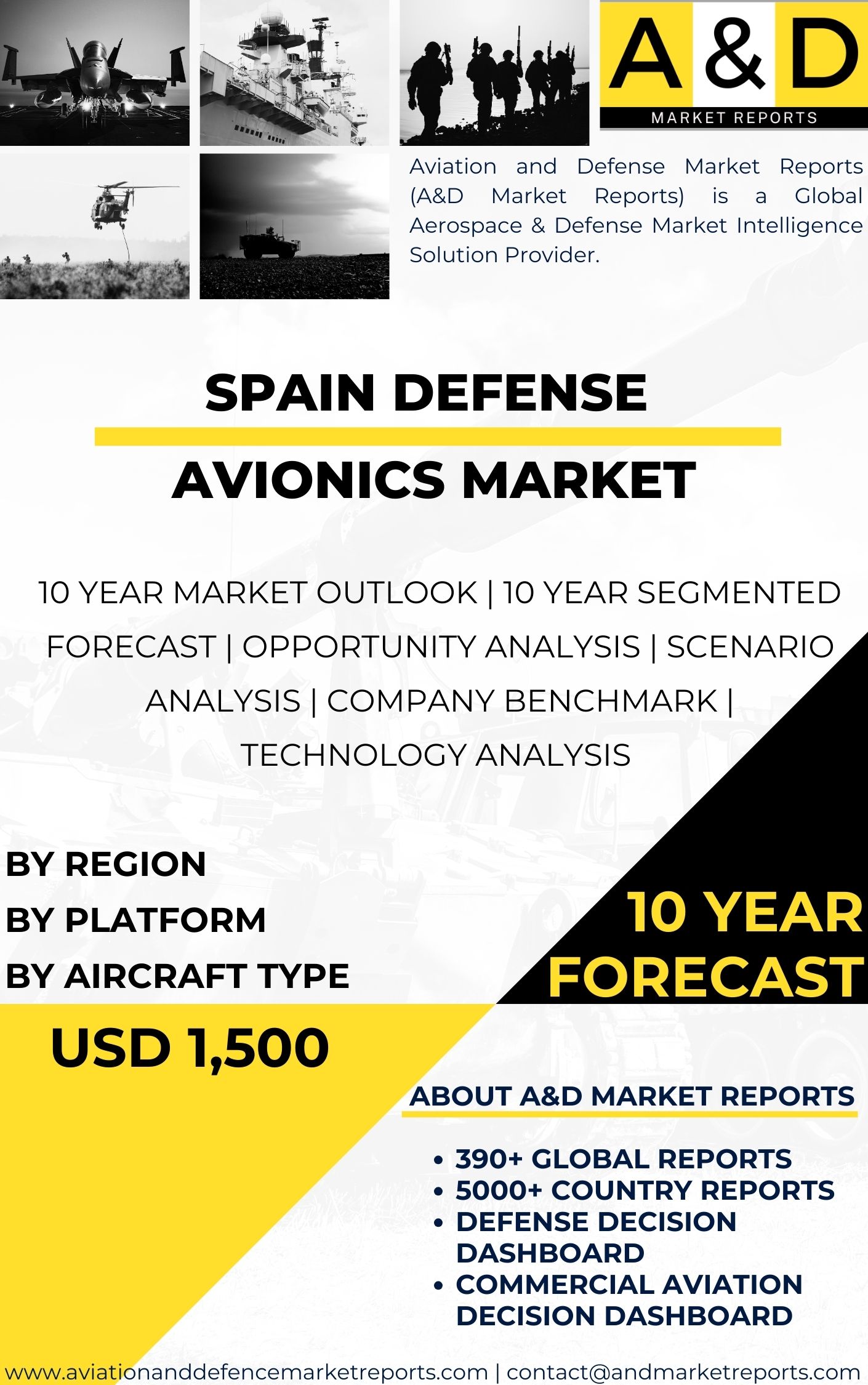
The Spain Defense Avionics Market plays a major role in strengthening the country’s military aviation capabilities. Avionics systems support communication, navigation, surveillance, flight control, and mission management functions in aircraft. These systems improve mission accuracy and operational safety in complex environments. In Spain, avionics are used in fighter jets, transport aircraft, helicopters, and unmanned aerial vehicles (UAVs). The market continues to grow as the Spanish Armed Forces modernize their air fleet. In addition, demand for integrated digital cockpit systems is increasing. Spain focuses on improving real-time data sharing and situational awareness through advanced avionics.
Historical Development of Avionics in Spain
The development of avionics in Spain began with basic flight instruments used in early aircraft. Initially, systems focused only on navigation and radio communication. Over time, Spain gradually improved its aerospace engineering capabilities. After joining international defense collaborations, Spain gained access to advanced avionics technologies. This helped local industries improve design and integration skills. During the late 20th century, Spain increased investment in aerospace R&D. As a result, domestic companies started participating in global aircraft programs. Today, Spain has a well-developed avionics ecosystem supported by international cooperation.
Key Players in the Market
Several important companies support the Spanish defense avionics sector. Indra Sistemas is one of the leading defense electronics and avionics providers in Spain. It develops mission systems, radar integration, and advanced cockpit technologies. Airbus Defence and Space also plays a major role through aircraft manufacturing and avionics integration programs. These companies support both military and multinational aviation projects. They also invest heavily in research and development. Collaboration between public and private sectors strengthens Spain’s aerospace ecosystem. In addition, smaller specialized firms contribute niche avionics solutions and components.
Role of International Collaboration
Spain’s avionics growth is strongly supported by international partnerships. The country participates in major European defense programs. These include collaborative aircraft development and avionics integration projects. Such partnerships help Spain access cutting-edge aviation technology. They also improve interoperability with NATO allies. Spanish companies contribute engineering expertise and manufacturing capabilities. In return, they gain experience in advanced system design. This cooperation strengthens Spain’s position in the global defense aviation industry. It also supports long-term industrial growth and knowledge transfer.
Technology Advancements in Avionics
Modern avionics systems in Spain use advanced digital and software-based technologies. These systems combine sensors, radar, GPS, and communication networks into a single platform. This improves situational awareness for pilots and mission operators. Glass cockpit systems are now widely used in modern aircraft. Artificial intelligence also helps process flight and mission data. UAVs use lightweight and highly automated avionics systems. Spain is also adopting modular avionics that can be upgraded easily. These innovations improve performance, flexibility, and mission readiness.
Challenges in the Market
The avionics market in Spain faces several important challenges. Technology changes happen very quickly, requiring constant upgrades. Development and integration costs remain very high. Budget limitations can slow down modernization programs. Cybersecurity threats also increase as systems become more connected. Ensuring compatibility between old and new systems is another challenge. Skilled workforce availability is also a concern in advanced avionics engineering. Despite these issues, Spain continues to invest in modernization. Strong planning and international cooperation help reduce these challenges.