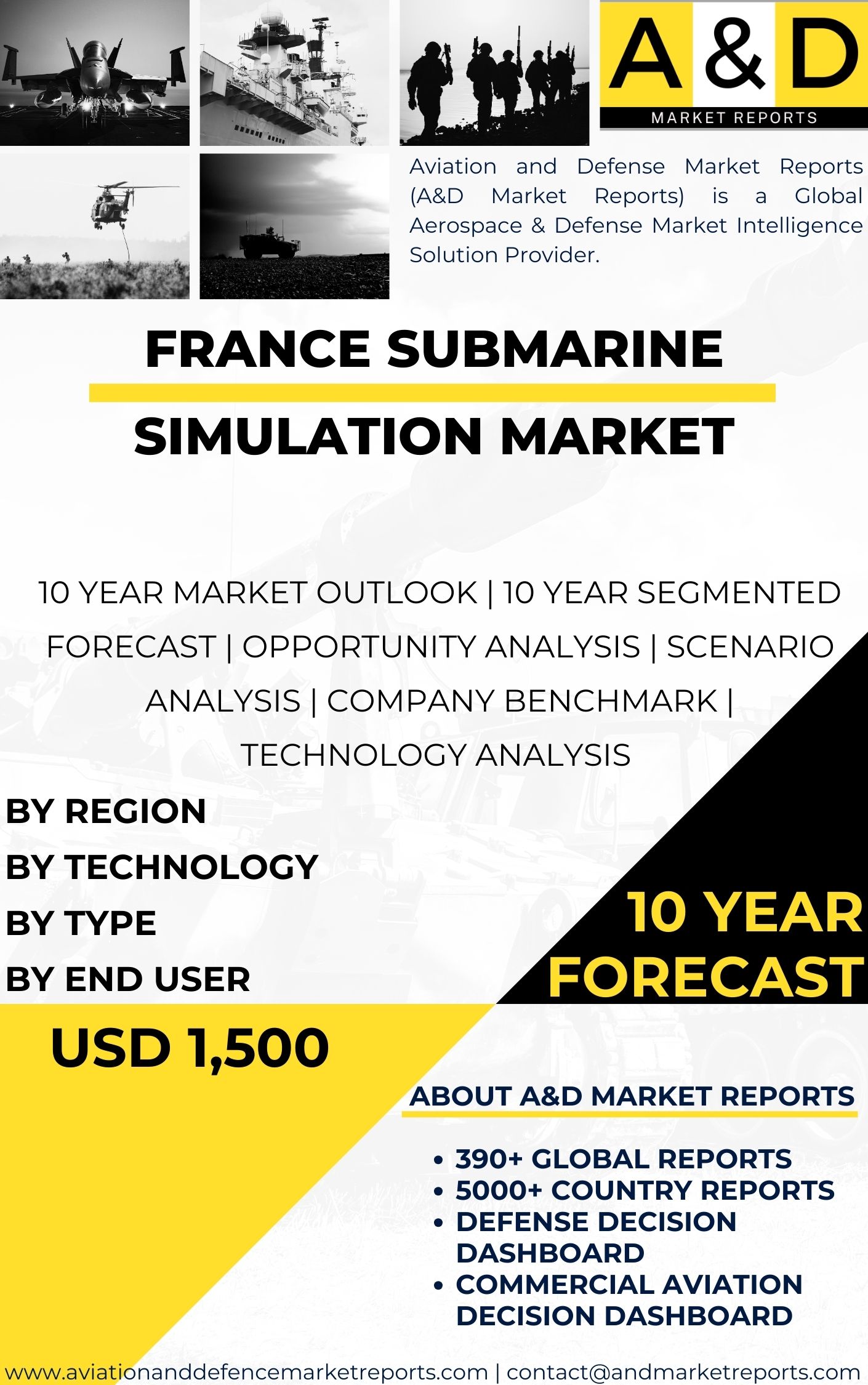
France Submarine Simulation Market

$1,500.00

Enquire Now

The submarine simulation market in France represents a highly specialized domain within the broader defense and training industry, where technological innovation, strategic necessity, and deep naval heritage converge. France?s long-standing maritime tradition has sustained a continuous emphasis on submarine warfare capabilities, supported by national champions in defense manufacturing and strong naval doctrine. The country has cultivated an engineering culture that places significant value on precision, reliability, and operational readiness, all of which are critical in shaping the submarine simulation sector. Simulations serve as an indispensable bridge between theoretical design, real-world testing, and operational training, allowing the French Navy to ensure that crew members, systems engineers, and command staff are fully prepared for missions across a wide variety of conflict environments.

Go To Global Report Page Track this market real time on DDD

Description

The submarine simulation market in France represents a highly specialized domain within the broader defense and training industry, where technological innovation, strategic necessity, and deep naval heritage converge. France?s long-standing maritime tradition has sustained a continuous emphasis on submarine warfare capabilities, supported by national champions in defense manufacturing and strong naval doctrine. The country has cultivated an engineering culture that places significant value on precision, reliability, and operational readiness, all of which are critical in shaping the submarine simulation sector. Simulations serve as an indispensable bridge between theoretical design, real-world testing, and operational training, allowing the French Navy to ensure that crew members, systems engineers, and command staff are fully prepared for missions across a wide variety of conflict environments.

Submarine simulation in France has historically been influenced by both national defense imperatives and the country?s standing as a nuclear power. The operation of nuclear-powered ballistic missile submarines adds layers of complexity to training requirements, demanding simulators capable of modeling not only technical systems but also tactical decision-making under high-stakes conditions. Developing such tools requires collaboration between defense prime contractors, digital technology firms, and research institutions. The broader ecosystem of French defense innovation, which integrates aerospace, naval, and advanced digital sectors, has provided fertile ground for these efforts. Simulation technology has long been regarded as an economical way to minimize wear and tear on actual submarines while enabling repeated, intensive training and experimentation that would otherwise be too risky or costly at sea.

Key players in the French submarine simulation market are closely tied to the national defense industry. Major defense firms with expertise in naval construction and electronic systems have invested in simulation solutions that reproduce the conditions encountered onboard attack submarines and ballistic missile submarines. Naval Group, for instance, plays a central role in systems integration and design, while firms specializing in electronics, sensors, and software provide the backbone of realistic simulation environments. Collaborative ventures with French research centers and universities have also contributed to advancements in human factors engineering, artificial intelligence, and immersive environments that enhance the training experience. Smaller specialized firms and cutting-edge startups have brought innovations in virtual reality, haptic feedback, and networked simulation, maintaining a level of technological dynamism within the market.

The historical trajectory of this market in France can be traced back to the gradual adoption of digital technologies within naval forces during the late twentieth century. As submarines became more complex, with increasingly automated control systems and sophisticated sonar suites, there was recognition of the need for equally advanced training systems onshore. Early submarine simulators were relatively basic in visual fidelity but provided valuable core training for handling propulsion, buoyancy, and combat systems. Over time, the shift toward fully immersive simulations gave way to an environment where multiple crew members could train simultaneously, replicating the coordination required during real-world operations. The emphasis moved from simply learning procedures to mastering decision-making in stressful, dynamic conditions where seconds could mean the difference between mission success and failure.

The economic significance of submarine simulation in France extends beyond the defense budget to the broader industrial base. Developing these solutions requires expertise in software engineering, computer-generated imagery, systems modeling, and ergonomics. Each simulator represents a fusion of hardware and software, often customized to replicate specific submarine classes. This provides employment opportunities for a wide spectrum of professionals, from naval engineers and software developers to psychologists specializing in human performance under stress. Moreover, the export potential of submarine technology indirectly benefits simulation providers, as international clients acquiring French-designed submarines often purchase complementary simulation systems to train their crews. This reinforces the role of simulation as a strategic tool for sustaining industrial competitiveness in the global defense arena.

Table of content

Table Of Contents

1 Market Introduction

1.1 Market Introduction
1.2 Market Definition
1.3 Market Segmentation
1.4 10 Year Market Outlook

2 Market Technologies

3 Global Market Forecast

3.1 Global Market Forecast
3.2 By Bomb Size
3.3 By Guidance

4 Europe Market Trends & Forecast

4.1 Drivers, Restraints And Challenges
4.2 PEST
4.3 Market Forecast
4.3.1 Market Forecast By Bomb Size
4.3.2 Market Forecast By Guidance
4.4 Scenario Analysis
4.5 Key Companies& Profiling

5 France Analysis

5.1 Current Levels Of Technology Maturation In This Market
5.2 Market Forecast
5.2.1 Market Forecast By Bomb Size
5.2.2 Market Forecast By Guidance
5.3 Scenario Analysis
5.4 Country Defense Budget (Historical and 10- year forecast)
5.5 Defense Budget Category Spending- 10- year forecast
5.6 Procurement Analysis
5.7 EXIM Data
5.8 Patents

6 Opportunity Matrix

6.1 By Bomb Size
6.2 By Guidance

7 Scenario Analysis

7.1 Scenario 1

7.1.1 By Bomb Size (Scenario-1)
7.1.2 By Guidance (Scenario-1)

7.2 Scenario 2

7.2.1 By Bomb Size (Scenario-2)
7.2.2 By Guidance (Scenario-2)

8 Company Benchmark

9 Strategic Conclusions

10 About Aviation And Defense Market Reports

Segments

By Technology
By Type

List of Tables

Table1: Global Market Forecast, Submarine Simulation Market
Table2: Europe Market Forecast, Submarine Simulation Market
Table3: Europe Market Forecast, By Technology
Table4: Europe Market Forecast, By Type
Table5: Europe, Scenario Analysis
Table6: France Market Forecast, Submarine Simulation Market
Table7: France Market Forecast, By Technology
Table8: France Market Forecast, By Type
Table9: France, Scenario Analysis
Table 10: France Defense Budget 10 Year Forecast
Table 11: France, Defense Budget Category Spending- 10- year forecast
Table 12: France, Procurement Analysis
Table 13: France, EXIM Data Analysis
Table 14: France, Opportunity Analysis, By Technology
Table 15: France, Opportunity Analysis, By Type
Table 16: France, Scenario Analysis, By Technology
Table 17: France, Scenario Analysis, By Type

List of Figures

Figure 1: Market Segmentation, France Submarine Simulation Market
Figure 2: Key Technology Analysis, Submarine Simulation Market
Figure 3: Global Market Forecast, Submarine Simulation Market
Figure 4: Europe, Market Forecast, Submarine Simulation Market
Figure 5: Europe, Market Forecast, By Technology
Figure 6: Europe, Market Forecast, By Type
Figure 7: Europe, Scenario Analysis
Figure 8: France, Market Forecast, Submarine Simulation Market
Figure 9: France, Market Forecast, By Technology
Figure 10: France, Market Forecast, By Type
Figure 11: France, Scenario Analysis
Figure 12: France, Defense Budget 10 Year Forecast
Figure 13: France, Defense Budget Category Spending- 10- year forecast
Figure 14: France, Procurement Analysis
Figure 15: France, EXIM Data Analysis
Figure 16: France, Opportunity Analysis, By Technology
Figure 17: France, Opportunity Analysis, By Type
Figure 18: France, Scenario Analysis, By Technology
Figure 19: France, Scenario Analysis, By Type
Figure 20: Company Benchmark

Aviation and Defense Market Reports


TPA | TIA | Consulting | Market Reports | Defense Decision Dashboard


Our Defense Report - Our Team Has Worked on More Than 250+ Individual Products / Markets