
Description
Overview of the Personal Air Mobility Market
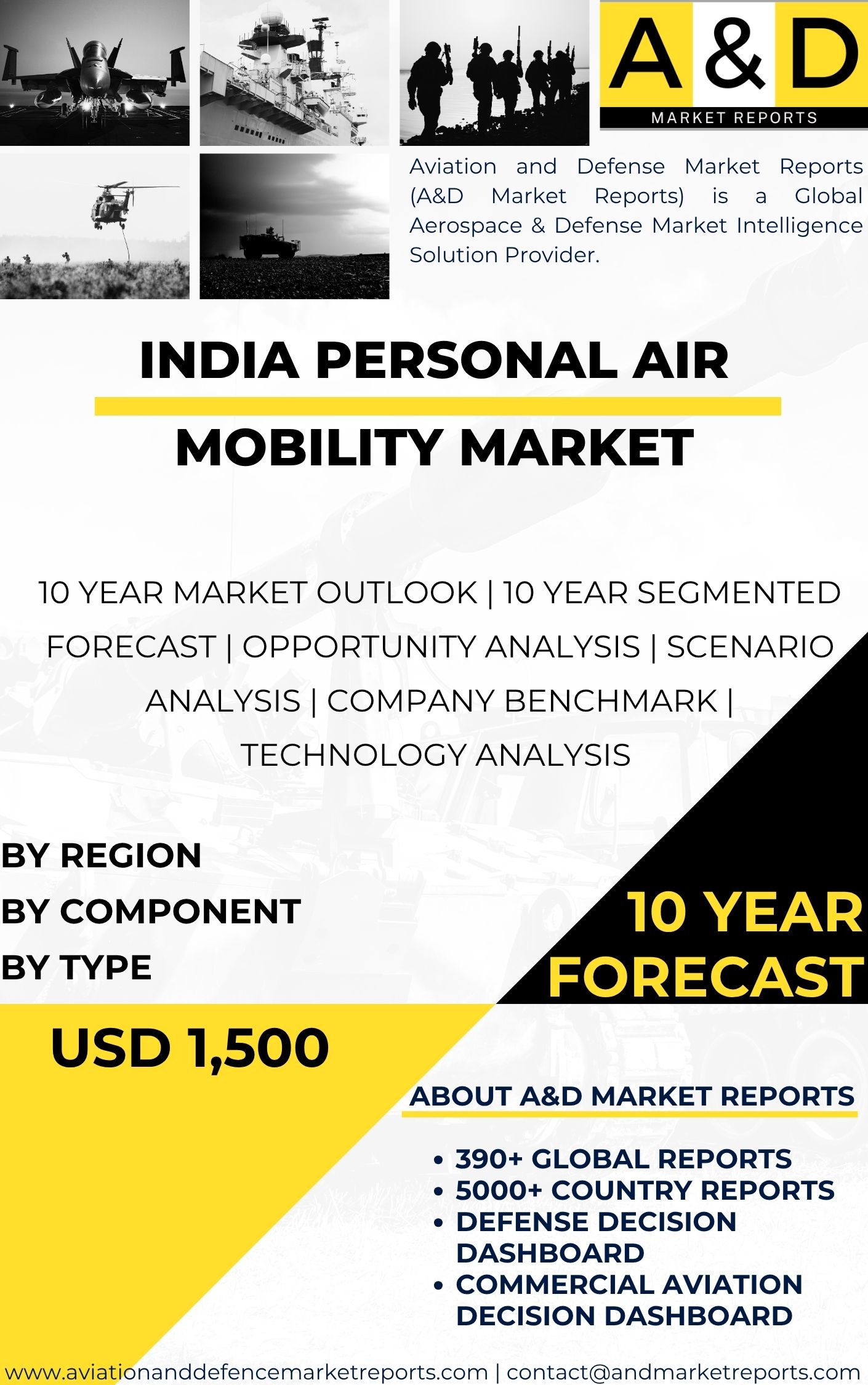
The India Personal Air Mobility is becoming an important part of the broader urban air mobility and advanced aerospace industry. This market focuses on compact electric aircraft and vertical takeoff and landing (VTOL) vehicles designed for short-distance transportation. These systems aim to reduce travel time, improve urban mobility, and support cleaner transportation methods. In addition, the market includes both piloted and autonomous aircraft developed for personal, commercial, and shared transportation services. Companies continue investing heavily in advanced aviation technologies because urban congestion and transportation inefficiencies continue increasing. As a result, personal air mobility is gaining attention as a future transportation solution for modern cities and metropolitan regions.
Market Structure and Industry Participants
The market structure includes aerospace startups, aircraft manufacturers, battery developers, software companies, infrastructure providers, and aviation technology firms. Established aviation companies work alongside emerging startups to accelerate innovation and product development. Moreover, research institutions and government agencies support testing, certification, and infrastructure planning activities. Technology developers also contribute advanced navigation systems, electric propulsion technologies, and autonomous flight software to improve aircraft performance and safety. In addition, infrastructure companies explore solutions for vertiports, charging systems, and urban traffic management networks. This collaborative ecosystem supports rapid technological progress and commercial market expansion.
Key Features of Personal Air Mobility Vehicles
Personal air mobility vehicles emphasize compact design, operational efficiency, and environmentally friendly transportation. Most systems use electric propulsion technologies that produce low emissions and reduced operational noise compared to traditional aircraft. Furthermore, VTOL capability allows these vehicles to operate within dense urban environments where conventional runways are unavailable. Manufacturers also prioritize lightweight structures and aerodynamic efficiency to improve flight range and battery performance. In addition, advanced safety systems and automated flight controls help improve operational reliability and passenger confidence. These features collectively support the development of practical and scalable urban air transportation systems.
Drivers Supporting Market Growth
Several important factors continue driving growth in the personal air mobility market. First, increasing traffic congestion in urban areas encourages interest in alternative transportation solutions. Second, improvements in battery technology and electric propulsion systems make personal air mobility more technically feasible. Furthermore, governments and private investors continue supporting advanced transportation research and infrastructure development. Rising environmental concerns also encourage the adoption of low-emission transportation systems. In addition, consumers and businesses increasingly seek faster and more flexible travel options for urban and regional transportation. These combined factors strengthen investment activity and accelerate market development.
Technological Advancements and Innovation
Technological innovation remains central to the growth of personal air mobility systems. Battery energy density improvements continue increasing flight range and operational efficiency for electric aircraft. In addition, autonomous navigation software and artificial intelligence technologies improve flight safety and operational automation. Advanced sensors, radar systems, and communication technologies also support obstacle detection and traffic coordination in crowded urban environments. Furthermore, lightweight composite materials help manufacturers reduce vehicle weight while maintaining structural strength and durability. Companies are also integrating digital interfaces and smart connectivity systems to improve passenger experience and operational management. These advancements continue shaping the future capabilities of personal air mobility platforms.
Urban Mobility and Transportation Applications
Personal air mobility systems support several transportation applications across urban and regional environments. Individual consumers may use these aircraft for faster personal commuting between cities or metropolitan districts. In addition, companies could operate fleet-based air taxi services for business travel and on-demand transportation. Emergency services and government agencies may also use these systems for rapid response operations and critical transportation missions. Furthermore, ride-sharing models could integrate personal air mobility into existing transportation networks to improve overall travel efficiency. These applications demonstrate the broad commercial potential of urban air transportation technologies.
Regulatory Environment and Safety Standards
The regulatory environment for personal air mobility continues evolving as aviation authorities develop standards for these new vehicle categories. Federal aviation agencies work closely with manufacturers to establish certification procedures, safety requirements, and operational guidelines. In addition, local governments explore policies related to urban flight routes, landing infrastructure, and noise management. Airworthiness testing, pilot certification, and autonomous system validation remain major priorities for regulators. Furthermore, safety standards focus heavily on passenger protection, operational reliability, and emergency response procedures. As regulations mature, they will play a major role in supporting public confidence and commercial deployment.
Supply Chain and Manufacturing Challenges
The personal air mobility market faces several supply chain and manufacturing challenges during its development phase. Manufacturers depend heavily on advanced batteries, electronic systems, lightweight composites, and precision aerospace components. In addition, securing stable supplies of semiconductors and high-performance materials remains important for production scalability. Battery manufacturing capacity and charging infrastructure development also influence market growth potential. Furthermore, companies must balance production cost efficiency with strict aerospace quality and safety standards. Despite these challenges, continued investment and industrial collaboration are helping strengthen supply chain resilience and manufacturing capabilities.
Role of Autonomous and Digital Technologies
Autonomous systems and digital technologies play a major role in the future of personal air mobility. Advanced flight control software helps aircraft maintain stable and safe operation with minimal pilot intervention. In addition, artificial intelligence systems support route optimization, traffic coordination, and predictive maintenance functions. Digital communication platforms also allow vehicles to interact with urban traffic management systems and other aircraft operating nearby. Furthermore, cloud-based operational systems improve fleet monitoring and service coordination for commercial operators. These digital technologies are expected to improve efficiency, safety, and scalability across the industry.
Strategic Importance of the Market
The personal air mobility market holds strong strategic importance because it supports transportation innovation, sustainability goals, and economic development. Urban air mobility systems may reduce road congestion and improve transportation accessibility within growing metropolitan regions. In addition, electric aviation technologies contribute to environmental sustainability by lowering emissions and reducing fuel dependency. Governments also view this market as an opportunity to strengthen aerospace leadership and support advanced manufacturing industries. Furthermore, the development of personal air mobility infrastructure could create new business opportunities, skilled jobs, and long-term economic growth. This strategic value continues attracting strong public and private sector interest.
Future Outlook of the Market
The future outlook for the personal air mobility market in the India remains highly promising due to rapid technological progress and growing transportation demand. Manufacturers are expected to introduce safer, quieter, and more efficient aircraft capable of supporting large-scale urban mobility operations. In addition, advances in autonomous flight systems, battery technology, and digital traffic management will likely improve operational reliability and affordability. Governments and infrastructure planners are also expected to expand support for urban air mobility integration and certification programs. As technology matures and public acceptance increases, personal air mobility could become a major component of future transportation systems worldwide.