
Description
Market Overview
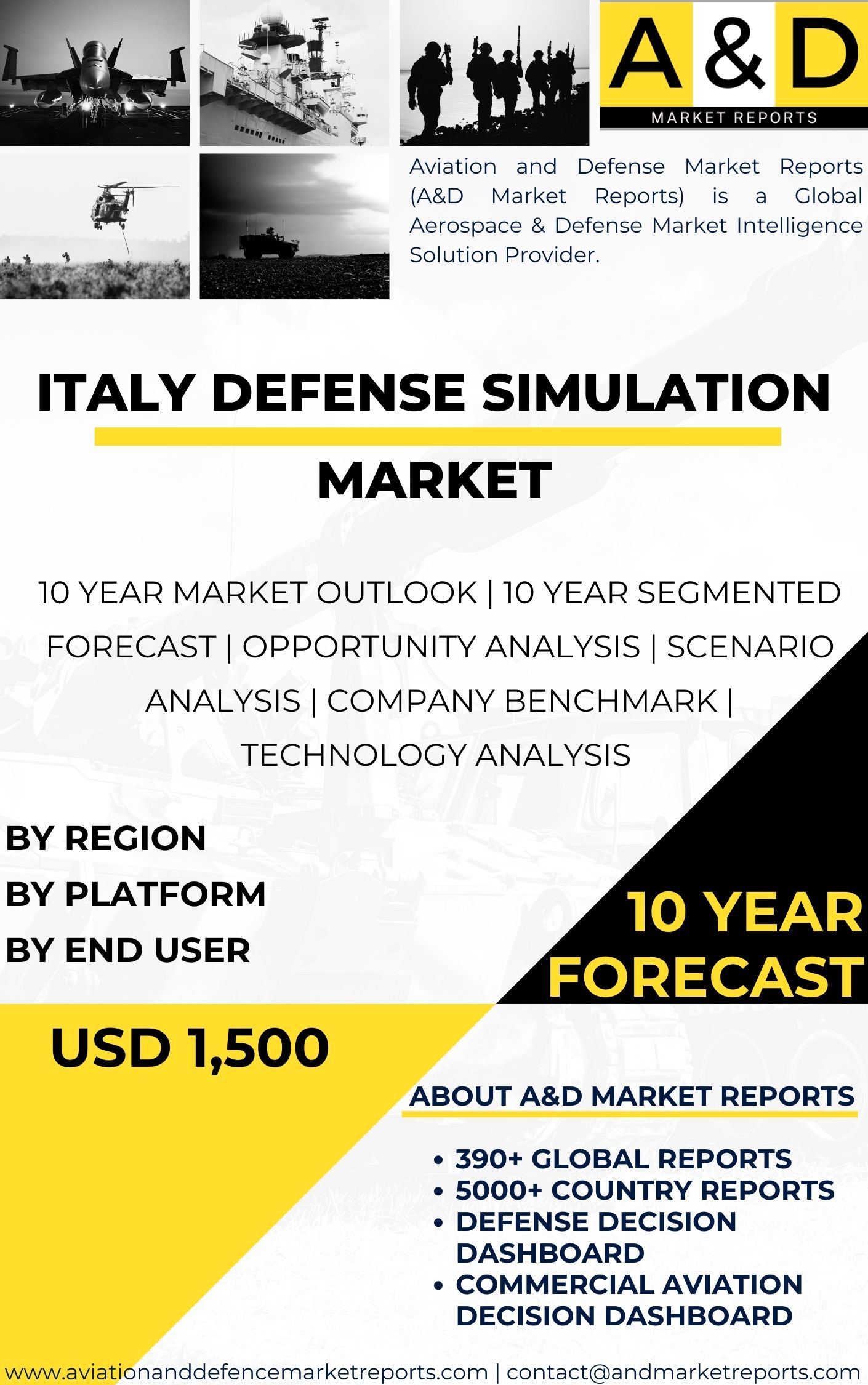
The Italy defense simulation market is a critical and rapidly growing segment of the country’s defense industry. Simulation technologies play a vital role in modern military training, operational planning, and strategic decision-making. These systems replicate real-world environments and combat scenarios, enabling military personnel to train in safe yet realistic conditions. They reduce the need for costly live exercises while improving efficiency and preparedness. Italy’s strategic position in Europe and its focus on strengthening national security further emphasize the importance of advanced simulation capabilities. The country continues to invest in innovative simulation technologies to enhance the readiness and effectiveness of its armed forces. This ongoing commitment supports modernization and ensures adaptability to evolving threats.
Key Growth Drivers
One of the main drivers of market growth is the increasing demand for advanced and cost-effective training solutions. Modern military operations require highly skilled personnel capable of responding to complex and unpredictable scenarios. Simulation technologies provide a controlled environment for repeated training without the risks associated with live operations. They also enable performance evaluation and continuous improvement. Italy’s defense sector is actively investing in research, development, and implementation of advanced simulation systems. Government funding and modernization initiatives further support this growth. These factors are driving widespread adoption across different branches of the military.
Range of Simulation Technologies
Italy’s defense industry offers a wide range of simulation technologies to meet diverse training and operational needs. These include virtual reality (VR) and augmented reality (AR) systems, computer-based simulations, and live, virtual, constructive (LVC) simulation environments. Each technology provides unique advantages, from immersive training experiences to large-scale operational modeling. These systems are designed to support training for soldiers, pilots, naval personnel, and command staff. Advanced software algorithms and high-fidelity graphics enhance realism and accuracy. Continuous technological advancements are improving system performance and user experience. This diverse range of solutions strengthens Italy’s defense training capabilities.
Role of International Collaboration
International collaboration plays a significant role in advancing Italy’s defense simulation capabilities. Partnerships with global technology providers and defense contractors enable access to cutting-edge innovations and expertise. These collaborations often involve joint development programs, technology transfer agreements, and shared research initiatives. Such efforts accelerate technological progress and improve system reliability. They also reduce development costs and risks associated with independent innovation. By leveraging international partnerships, Italy enhances its simulation capabilities and maintains competitiveness in the global defense market.
Participation in Multinational Programs
Italy’s active participation in multinational defense programs, particularly through NATO, further supports the growth of simulation technologies. These programs emphasize interoperability and joint training among allied forces. Simulation systems play a crucial role in preparing personnel for multinational operations. Shared development efforts and standardized systems improve coordination and efficiency. Italy benefits from access to global expertise and advanced training frameworks. This participation strengthens its defense capabilities and ensures alignment with international standards. It also enhances the effectiveness of joint missions and collaborative defense strategies.
Importance in Modern Warfare
Simulation technologies are essential in modern military operations, providing realistic training and operational insights. They allow personnel to practice complex missions and decision-making processes in a risk-free environment. These systems support mission planning, testing of strategies, and evaluation of new technologies. They also improve situational awareness and readiness across all levels of command. In addition, simulations are used to analyze potential threats and optimize resource allocation. As warfare becomes increasingly technology-driven, the role of simulation systems continues to expand. They are now a key component of modern defense strategies.
Export Potential and Market Expansion
The export potential of Italy’s defense simulation market is a significant driver of growth. Italian simulation technologies are recognized for their quality, reliability, and innovation. Many countries seek advanced training solutions to improve their military capabilities. Export activities generate revenue and strengthen Italy’s defense industry. They also foster long-term partnerships with international clients. Increasing global demand for simulation systems is expected to create new opportunities for expansion. This enhances Italy’s position in the global defense market.
Challenges in the Market
Despite strong growth prospects, the market faces several challenges. Ensuring high levels of realism and accuracy in simulations is a key concern. Developing advanced systems requires substantial investment in technology and infrastructure. Integration of different simulation platforms into a unified system can also be complex. Additionally, maintaining up-to-date systems in a rapidly evolving technological environment is challenging. Budget constraints and regulatory requirements may further impact development. Addressing these challenges is essential for sustaining long-term growth and effectiveness.
Need for Technological Innovation
Continuous innovation is crucial for maintaining leadership in the defense simulation market. Emerging technologies such as artificial intelligence and machine learning are enhancing simulation capabilities. These technologies enable more realistic and adaptive training scenarios. High-fidelity modeling and advanced graphics improve immersion and user experience. Integration with real-time data and analytics further enhances system effectiveness. Ongoing research and development investments are essential to drive these advancements. Innovation also supports the integration of simulation systems with other defense technologies, ensuring future readiness.
Future Outlook
The future of the Italy defense simulation market appears highly promising. Ongoing defense modernization initiatives will continue to drive demand for advanced training solutions. Increased integration of simulation technologies across defense platforms will expand their applications. Technological advancements will further improve realism, efficiency, and scalability. International collaborations will remain a key factor in supporting growth and innovation. Rising global defense spending is also expected to contribute to market expansion. Overall, the market is set for steady and sustained growth in the coming years.
Conclusion
In conclusion, the Italy defense simulation market is a vital and expanding segment of the country’s defense industry. These technologies play a crucial role in enhancing training, operational readiness, and strategic planning. Strong investments in innovation, research, and international collaboration continue to drive market growth. Despite existing challenges, the sector offers significant opportunities for development. Italy’s focus on advanced technologies and global partnerships strengthens its competitive position. As defense requirements evolve, simulation systems will remain essential. The market is well-positioned for long-term growth and strategic importance.