
Description
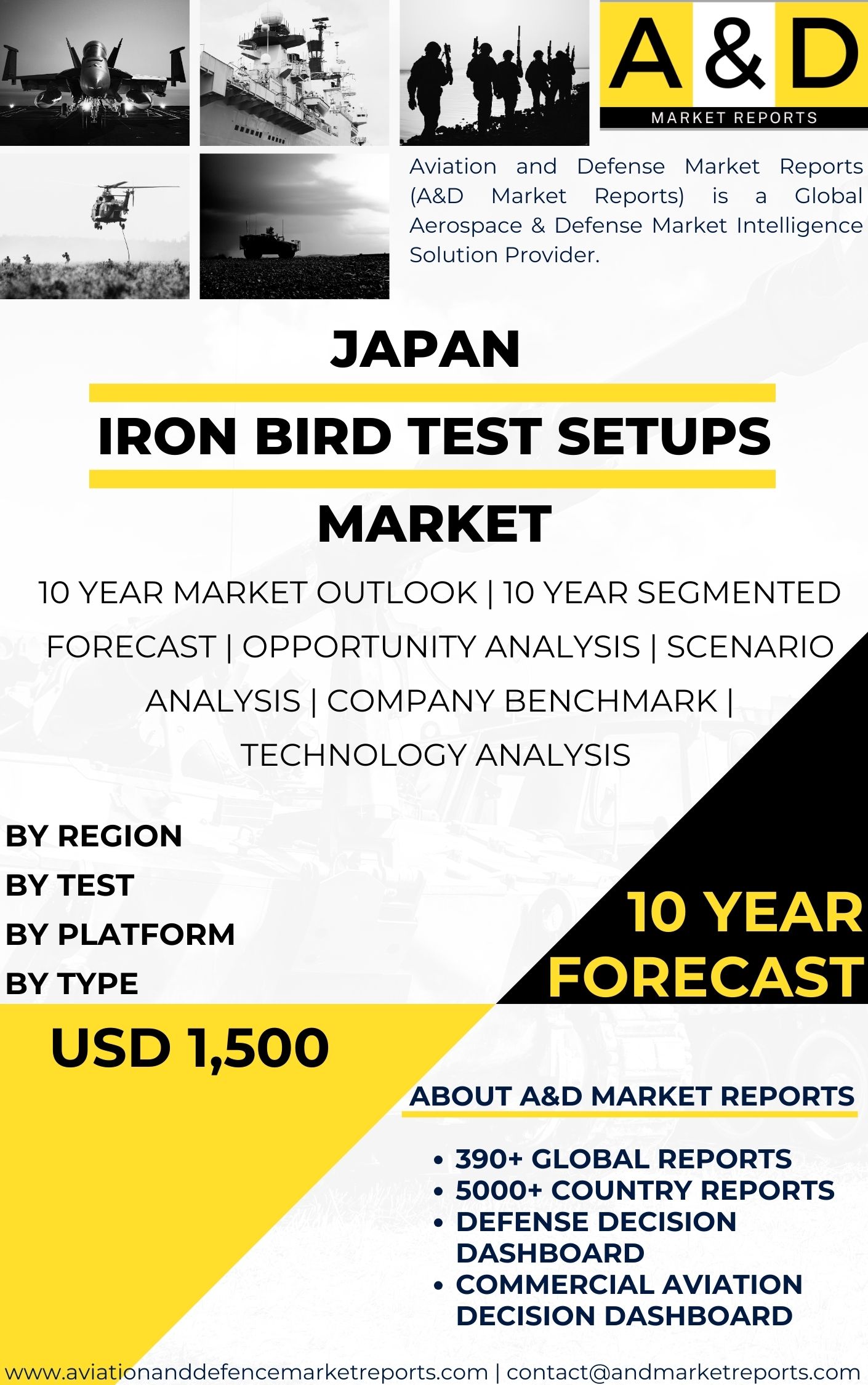
Japan iron bird test setup market represents a cornerstone of the country’s advanced aerospace development ecosystem, providing a full-scale, ground-based environment for validating complex aircraft systems before flight testing. An iron bird setup recreates the functional layout of critical aircraft subsystems without the complete airframe, allowing engineers to evaluate hydraulics, avionics, electrical systems, flight controls, and embedded software in an integrated manner. This approach enables realistic replication of operational loads and system interactions under controlled conditions, significantly reducing technical uncertainty during aircraft development.
In Japan, where engineering precision and safety assurance are deeply embedded in industrial culture, iron bird testing is viewed as an essential stage rather than a supplementary validation step. These platforms support early detection of integration issues that are difficult to uncover through isolated component testing or digital simulations alone, ensuring higher system maturity before progression to costly flight trials.
Japan Iron Bird Test Setup Market Role in Aerospace Programs
Japan iron bird test setup market plays a decisive role in supporting both civilian and defense aerospace programs, particularly those involving advanced fighters, transport aircraft, and surveillance platforms. The increasing complexity of modern aircraft systems, characterized by tightly coupled mechanical, electrical, and software architectures, makes integrated ground testing indispensable. Iron bird setups allow engineers to validate system interoperability while designs are still adaptable, reducing the risk of late-stage redesigns.
These testbeds are especially valuable for stealth-oriented and mission-critical aircraft, where even minor system incompatibilities can have significant operational consequences. By identifying issues such as control logic conflicts, hydraulic interference, or signal latency early in development, Japanese aerospace programs achieve higher reliability and program efficiency.
Japan Iron Bird Test Setup Market Technological Evolution
Japan iron bird test setup market has evolved alongside advances in digital engineering and modular system design. Modern setups increasingly feature reconfigurable architectures that allow rapid adaptation as aircraft designs mature or mission requirements change. This modularity supports iterative development cycles, enabling continuous refinement from early design validation through to late-stage system qualification.
Digitally connected architectures enhance data acquisition and analysis, allowing engineers to correlate physical test results with simulation outputs. This integration strengthens design confidence and supports faster decision-making, reflecting Japan’s emphasis on disciplined yet agile aerospace development practices.
Integration and Validation Capabilities
Japan iron bird test setup market is distinguished by its focus on deep system integration and real-time validation. These platforms enable comprehensive testing of how avionics, flight controls, and power systems interact under simulated operational loads and fault conditions. Unlike isolated bench tests, iron birds replicate realistic system dependencies, revealing cascading effects that could emerge during real-world operations.
The inclusion of actual production components as they become available further enhances validation accuracy. This phased integration ensures that test results remain representative of the final aircraft configuration, improving confidence in performance, safety, and maintainability outcomes.
Japan Iron Bird Test Setup Market Human Factors and Operational Simulation
Japan iron bird test setup market increasingly incorporates pilot interaction and human factors evaluation as part of system validation. By integrating cockpit elements or flight simulators, engineers can assess control ergonomics, display logic, and pilot workload alongside technical system performance. This combined evaluation ensures that human-machine interfaces support intuitive operation and effective decision-making.
Iron bird platforms also provide a safe environment to rehearse abnormal and emergency scenarios. Testing system behavior under failure conditions strengthens operational readiness and supports the development of robust procedures, which is particularly critical for military platforms with demanding mission profiles.
Use of Hardware-in-the-Loop Technologies
Hardware-in-the-loop simulation has become a defining feature of Japan’s iron bird test setup capabilities. This approach allows real hardware components to operate within simulated flight and environmental conditions, blending physical testing with advanced virtual models. Such integration enables rapid iteration of software and control logic while maintaining realistic system responses.
By validating hardware and software together, Japanese developers can identify integration risks early and implement corrective measures efficiently. This capability reduces development timelines and minimizes the likelihood of costly modifications during later testing phases.