
Description
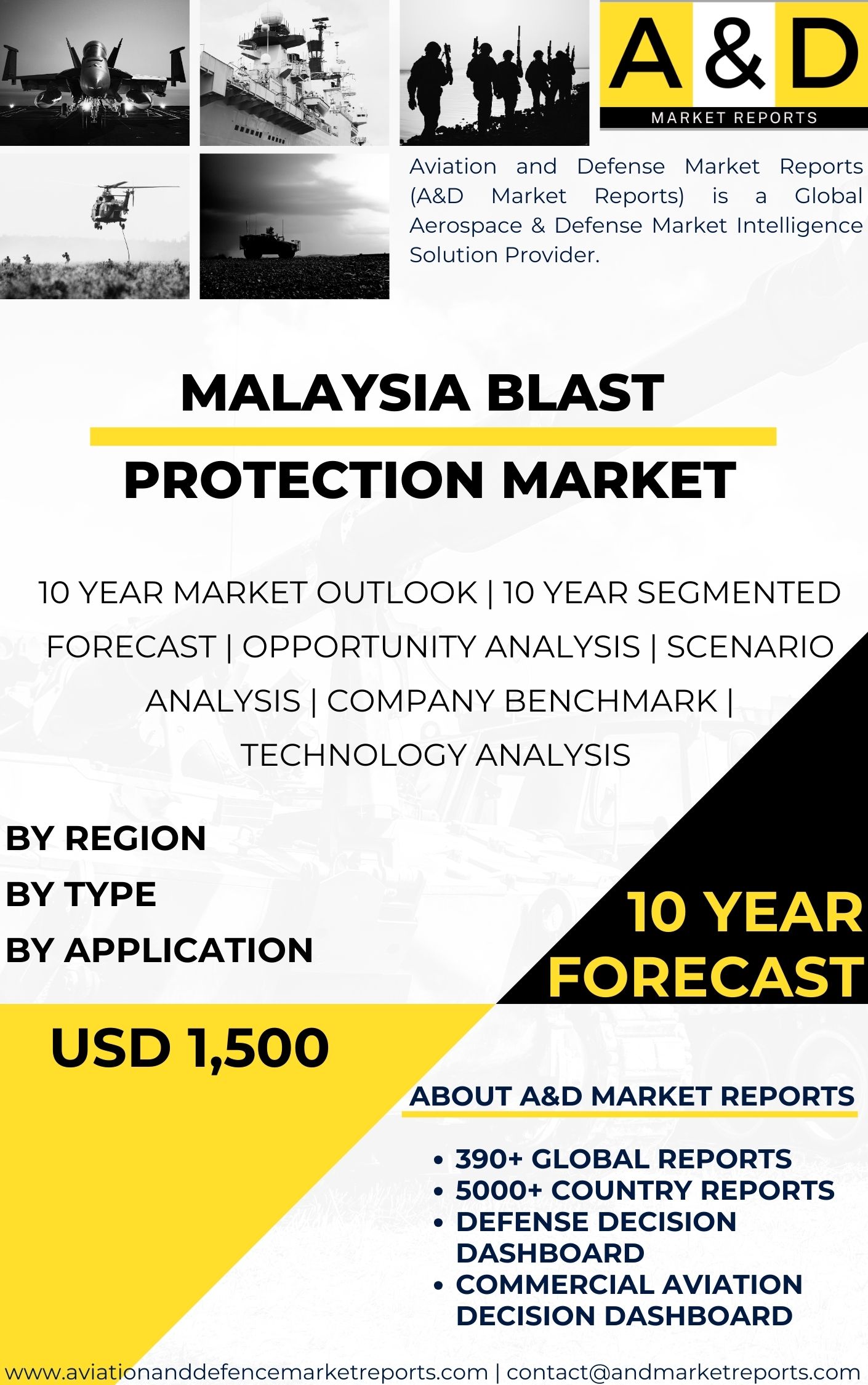
Malaysia Blast Protection Market has become an increasingly important segment of the nation’s defense and security framework. As Malaysia faces a rapidly evolving threat landscape, the need for advanced protection systems capable of mitigating the destructive effects of explosions has grown significantly. Blast protection technologies include specialized materials, reinforced structures, containment systems, and high-performance defensive solutions designed to reduce casualties and safeguard vital assets. Malaysia’s rising investment in this area highlights its commitment to enhancing national resilience and ensuring the safety of its population, infrastructure, and economic interests.
The importance of the Malaysia Blast Protection Market is reinforced by the country’s role as a strategic hub within Southeast Asia. With extensive maritime routes, financial centers, industrial hubs, and transportation networks, Malaysia holds a central position in regional trade and logistics. This makes its infrastructure an attractive target for disruptive incidents, whether intentional or accidental. Protecting airports, seaports, industrial complexes, rail networks, and government facilities is essential not only for national stability but also for maintaining the continuity of regional commerce. As threats become more complex, Malaysia increasingly prioritizes robust blast protection systems to safeguard operations across its critical sectors.
Malaysia Blast Protection Market Growth Drivers
The growth of the Malaysia Blast Protection Market is strongly driven by the government’s commitment to strengthening national security capabilities. Recognizing the importance of maintaining technological superiority, Malaysia has adopted a proactive approach to addressing both traditional security risks and emerging asymmetric threats. These efforts involve the incorporation of blast-resistant building materials, structural reinforcements, protective shelters, perimeter barriers, and advanced detection and monitoring technologies. Such systems provide layered protection for personnel, equipment, and infrastructure, forming an essential part of broader national defense planning.
Another major contributor to market expansion is Malaysia’s increasing reliance on secure and resilient infrastructure. As urbanization accelerates and industrial zones expand, the need to protect high-density public spaces and energy facilities becomes even more critical. Blast-resistant designs are being integrated into new construction projects, particularly in areas where high-risk operations are carried out, such as petrochemical plants, power-generation facilities, and transportation hubs. These protective measures help reduce operational vulnerability and improve emergency preparedness across sectors.
Malaysia Blast Protection Market Collaboration and R&D
International partnerships have significantly supported the development of the Malaysia Global Blast Protection Market. By collaborating with global defense companies and technology firms, Malaysia gains access to cutting-edge protective systems and design methodologies. These partnerships foster cross-border knowledge exchange, enabling Malaysian industries to adapt advanced technologies to local conditions and requirements. Additionally, joint initiatives contribute to strengthening the domestic defense manufacturing ecosystem, allowing Malaysia to gradually expand its indigenous capabilities.
Research and development play a central role in Malaysia’s long-term blast protection strategy. Investments in advanced material science, engineering, testing facilities, and simulation technologies enable the creation of innovative protective solutions tailored to diverse environments. Malaysian universities, research institutions, and defense companies are working together to develop high-strength composites, flexible blast panels, shockwave-dissipating structures, and automated monitoring systems. These innovations not only meet domestic needs but also enhance Malaysia’s potential to become a regional exporter of blast protection technologies.
Malaysia Blast Protection Market Challenges
Despite strong progress, the Malaysia Global Blast Protection Market faces several challenges. The implementation of high-performance blast protection systems can involve substantial costs, particularly when upgrades are required for large-scale infrastructure or when incorporating advanced materials. Budget constraints may limit the pace of modernization or restrict the adoption of the most sophisticated technologies.
Another challenge concerns the need to maintain compliance with international safety regulations and engineering standards. Ensuring consistent quality across diverse projects requires rigorous testing, certification processes, and skilled personnel capable of implementing complex blast-resistant designs. Malaysia must continue investing in training, accreditation, and regulatory oversight to ensure long-term reliability and safety.
Additionally, evolving threat patterns demand continuous innovation. As hostile actors adopt new techniques and more powerful explosive devices, Malaysia must remain agile in updating blast protection strategies to counter emerging risks effectively. This requires sustained investment, long-term planning, and strong coordination between government agencies, industry players, and research bodies.
Outlook
The outlook for the Malaysia Blast Protection Market remains highly optimistic. As the nation strengthens its position as a regional center for trade and logistics, the need for resilient infrastructure will continue to grow. Blast protection systems will play a crucial role in protecting high-value assets, securing transportation networks, and ensuring business continuity. Malaysia’s focus on building indigenous technological capabilities, supported by international partnerships and strong R&D foundations, places the country on a path toward becoming a significant player in the global blast protection industry.
In conclusion, the Malaysia Blast Protection Market is central to the nation’s broader security and development goals. Through strategic investments, technological innovation, and collaborative partnerships, Malaysia is working to create a secure environment capable of withstanding evolving threats. These efforts reflect the country’s commitment to protecting its citizens, ensuring economic stability, and maintaining its role as a dependable regional leader in defense preparedness.