
Description
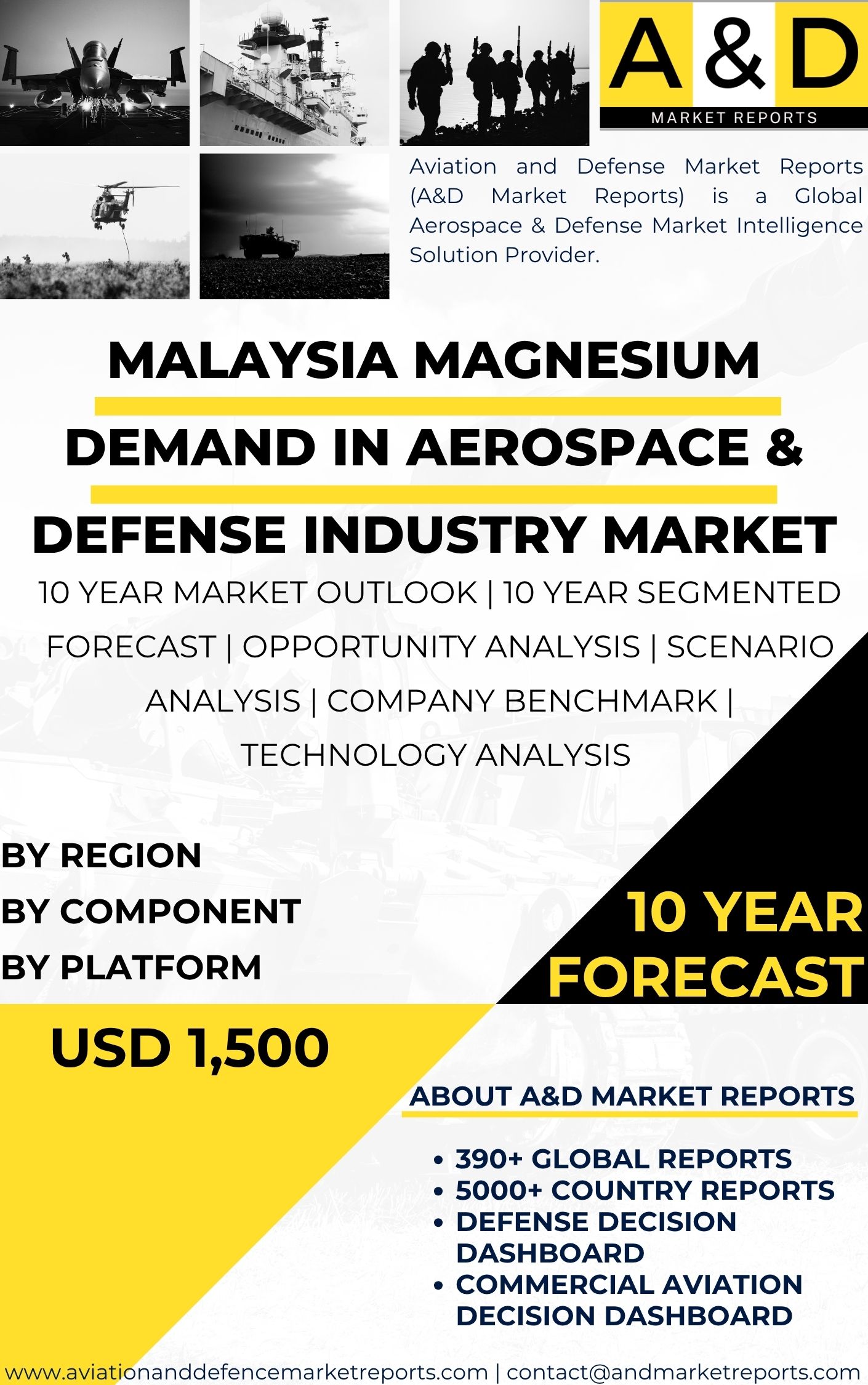
Magnesium demand in Aerospace & Defense market in Malaysia is strongly driven by the metal’s exceptional lightweight properties and high strength, which are essential for improving efficiency and performance in modern aircraft and defense systems. Magnesium alloys help reduce component weight without compromising structural integrity, supporting better fuel economy, enhanced payload capacity, and reduced operational costs. These advantages are especially critical for aerospace platforms where even minor weight reductions lead to substantial gains in range, endurance, and emissions control.
Adoption Trends in the Malaysia Magnesium in Aerospace and Defense Market
Malaysia’s aerospace and defense sectors are increasingly incorporating magnesium alloys into engine components, airframe structures, helicopter transmission casings, and durable lightweight defense equipment. The shift toward advanced and lighter aircraft amplifies the need for materials that can endure mechanical stress, varying temperatures, and corrosion. Magnesium alloys are also being utilized in missile and spacecraft components, where durability and weight reduction are mission-critical. As Malaysia modernizes its defense forces, demand for such materials continues to grow steadily.
Sustainability and Material Efficiency in the Malaysia Magnesium in Aerospace and Defense Market
The use of magnesium in Malaysia aligns with global sustainability trends. Its recyclability supports long-term environmental goals by reducing waste and improving material circularity. With Malaysia depending heavily on imported magnesium, recycling initiatives help mitigate supply chain vulnerabilities, stabilize availability, and reduce exposure to global price fluctuations. Increased investment in research and development aims to refine production efficiency and improve alloy performance, supporting Malaysia’s progression toward greater material independence.
Challenges Faced by the Malaysia Magnesium in Aerospace and Defense Market
Despite its advantages, magnesium production presents several challenges. Extraction and refining processes require significant energy inputs, making cost management a major factor for manufacturers. However, the metal’s superior strength-to-weight ratio compared to aluminum and steel continues to justify its adoption. Technological advancements are also helping overcome performance barriers by improving heat resistance, strength, and corrosion protection, reinforcing magnesium’s suitability for demanding aerospace and defense environments.
Industrial and Technological Drivers
Malaysia’s expanding aerospace manufacturing capabilities, supported by both government and private sector investments, drive the need for advanced materials such as magnesium alloys. These alloys meet stringent regulatory and safety requirements for aerospace applications, particularly where thermal conductivity, vibration resistance, and mechanical strength are necessary. Their versatility enables usage in airframes, electronic casings, unmanned systems, and weapon platforms, positioning magnesium as an essential material in Malaysia’s evolving defense industrial base.
Regional Influence
As part of the broader Asia-Pacific aerospace supply chain, Malaysia benefits from growing regional demand for lightweight, high-performance materials. Rising defense budgets and expanding aerospace hubs in nearby countries provide strong market pull. Regional collaborations and trade partnerships support continuous supply of aerospace-grade magnesium while offering opportunities for joint development, local processing, and technological exchange.
Innovation and Collaboration
Malaysia’s pursuit of advanced magnesium alloys encourages close cooperation between local industries, research institutions, and global technology leaders. These collaborations aim to enhance attributes such as fatigue life, thermal stability, and corrosion resistance—key requirements for aerospace and defense applications. Emerging manufacturing technologies, including additive manufacturing, are further enhancing production precision and unlocking new potential for magnesium-based components.
Supply Chain Dynamics
Magnesium’s strategic importance means that global supply chain factors—including geopolitical tensions, trade restrictions, and production bottlenecks—affect availability and pricing. Malaysian manufacturers are adopting risk mitigation strategies such as diversifying suppliers, investing in local production capabilities, and strengthening recycling processes. These efforts ensure long-term material security, operational continuity, and resilience in magnesium-dependent industries.
Outlook
Overall, magnesium demand in Malaysia’s aerospace and defense sectors is on a stable growth trajectory. Its lightweight strength, sustainability benefits, and compatibility with next-generation manufacturing technologies position magnesium alloys as indispensable for the country’s future aerospace ambitions. As Malaysia continues advancing its aerospace and defense manufacturing ecosystem, magnesium will remain a cornerstone material supporting innovation, competitiveness, and operational excellence.