
Description
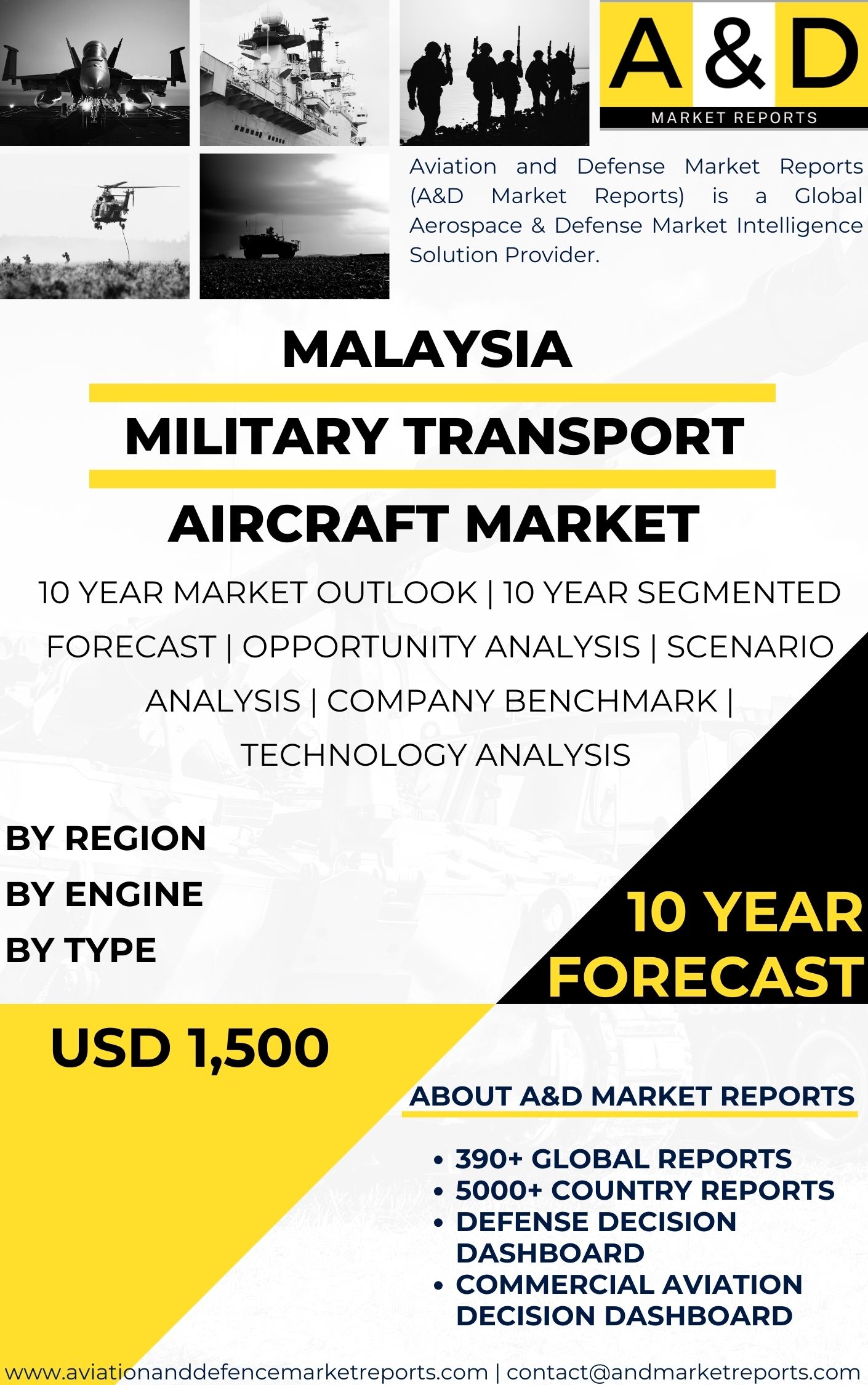
Malaysia Transport Aircraft market has grown steadily in recent years, reflecting the nation’s commitment to improving air mobility, strengthening humanitarian response capabilities, and enhancing military airlift operations. Transport aircraft, designed to carry passengers, equipment, and cargo across long distances, form a critical component of both civilian aviation and defense logistics. Their adoption has enabled Malaysia to establish a modern, efficient, and reliable air transport ecosystem that supports national security, economic development, and broader regional connectivity.
Strategic Importance of the Malaysia Transport Aircraft Market
Malaysia’s geographic and strategic position within Southeast Asia underscores the importance of a capable and flexible air transport fleet. Transport aircraft strengthen the country’s disaster response capacity, support logistical operations, and enhance civilian travel infrastructure. By investing in advanced transport aircraft, Malaysia improves operational readiness, accelerates emergency response times, and supports economic activities reliant on smooth air mobility.
Technological Advancements in the Malaysia Transport Aircraft Market
Recent developments in the Malaysia Transport Aircraft market highlight significant technological progress. Modern platforms feature advanced avionics, improved fuel-efficient engines, enhanced cargo-handling systems, and optimized aerodynamics. These innovations boost operational efficiency, lower long-term operational costs, and allow both civilian and military operators to conduct long-range missions with greater safety and reliability. Such advancements have expanded the strategic value of transport aircraft across multiple sectors.
Civil Aviation Applications in the Malaysia Transport Aircraft Market
Transport aircraft serve as an essential backbone for Malaysia’s civil aviation ecosystem. Malaysia Airlines and other domestic carriers rely on these aircraft to operate extensive networks of domestic and international routes. Beyond passenger travel, transport aircraft support the country’s tourism industry, facilitate commercial cargo movement, and contribute to economic growth by improving the flow of goods and people. Their versatility ensures that Malaysia maintains robust air connectivity across global and regional destinations.
Defense Applications in the Malaysia Transport Aircraft Market
The Malaysia Transport Aircraft market also plays a crucial role in national defense. The Royal Malaysian Air Force depends on transport aircraft for troop movement, equipment transport, humanitarian missions, and rapid deployment operations. These aircraft support disaster relief efforts, evacuations, and joint exercises with international partners. As Malaysia continues to modernize its military, the demand for reliable and flexible air mobility solutions is expected to rise.
Industry Development in the Malaysia Transport Aircraft Market
Malaysia has shown growing interest in developing indigenous aerospace capabilities. Local R&D programs and partnerships with major global aerospace companies contribute to technology transfer, industrial growth, and domestic expertise in aircraft manufacturing and systems integration. These initiatives strengthen the country’s defense industrial base while positioning Malaysia to participate more actively in the global transport aircraft supply chain.
International Collaborations in the Malaysia Transport Aircraft Market
To stay aligned with global advancements, Malaysia actively collaborates with international aerospace manufacturers and technology providers. These partnerships help secure access to cutting-edge aircraft, maintenance technologies, and operational best practices. Collaboration also supports capacity building, enabling local industries to expand their technical competencies and support future aircraft programs.
Challenges
Despite substantial progress, the Malaysia Transport Aircraft market faces several challenges. The acquisition and maintenance of modern transport aircraft demand significant financial investment, which can strain government and commercial budgets. Continuous training is essential for pilots, technicians, and support personnel to meet global safety and performance standards. Additionally, evolving air mobility needs—ranging from increasing passenger travel volumes to expanded humanitarian responsibilities—require ongoing modernization and strategic planning.
Future Outlook
The outlook for the Malaysia Transport Aircraft market remains highly positive. Continued investment in air mobility, regional cooperation initiatives, and disaster relief capabilities will drive long-term demand for advanced transport aircraft. As technologies evolve, aircraft with greater efficiency, payload capacity, and mission versatility will shape the future landscape of Malaysia’s aviation and defense sectors. The country’s participation in international humanitarian operations and economic corridors will further influence aircraft procurement strategies and capability requirements.
Conclusion
The Transport Aircraft market in Malaysia has experienced substantial growth supported by strategic investments, international partnerships, and advances in aviation technology. Transport aircraft have become essential to Malaysia’s civilian aviation, humanitarian efforts, and military logistics. However, to sustain this growth, Malaysia must address challenges related to budget allocation, technical training, system modernization, and engineering capacity. By doing so, the country will continue to strengthen its air mobility infrastructure, enhance national security, and support long-term economic development.