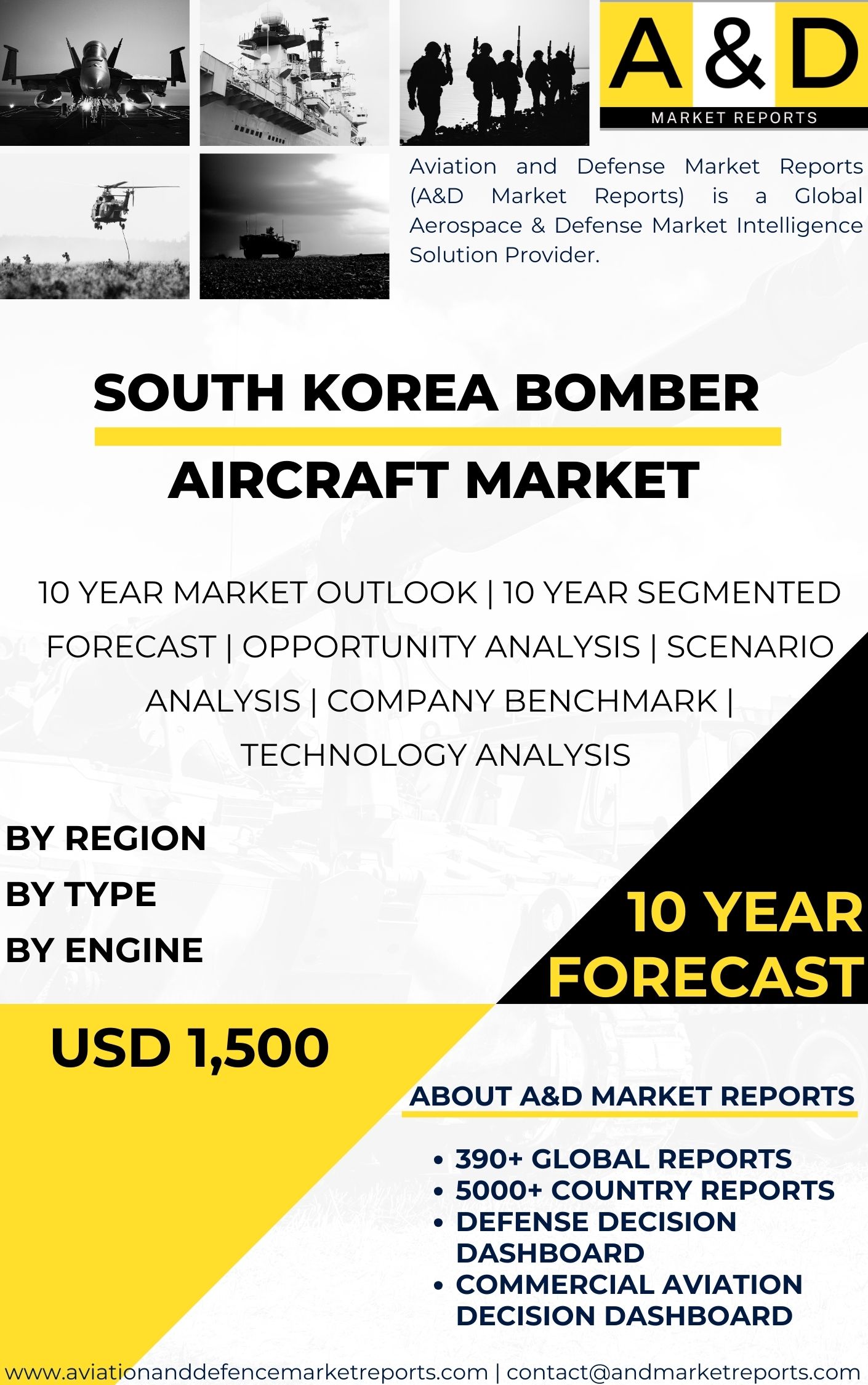
South Korea Bomber Aircraft Market

$1,500.00

Enquire Now
Category: Tags: , Report ID: ANDCKR0022

The South Korea bomber aircraft market is a significant segment within the nation’s defense industry, providing essential capabilities for strategic deterrence and defense. Bomber aircraft are long-range, heavy-duty military planes designed to carry and deliver various types of munitions, making them crucial assets for national security and power projection. This article provides an in-depth analysis of the current state, growth drivers, challenges, key players, and future prospects of the South Korea bomber aircraft market.

Go To Global Report Page Track this market real time on DDD

Description

South Korea Bomber Aircraft Market Overview

The South Korea bomber aircraft market is an important part of the country’s defense industry. Bomber aircraft support strategic deterrence and long-range strike missions. These aircraft can carry heavy payloads and operate over long distances. As a result, they play a key role in national security planning.

Historical Development of Bomber Aircraft

The South Korea bomber aircraft market began to develop after the post-war period. Security concerns created the need for a stronger air defense structure. To improve military reach and deterrence, South Korea focused on acquiring and developing bomber aircraft.

Current Market Landscape

Today, the market includes a mix of domestically developed aircraft and foreign acquisitions. South Korean defense firms have improved aircraft design and system integration. This progress has reduced dependence on imports and increased self-reliance.

Key Growth Drivers

Military Modernization Efforts

Military modernization supports the South Korea bomber aircraft market. Ongoing regional tensions increase demand for advanced air power. Bomber aircraft improve strike capability and operational flexibility.

Strategic Regional Importance

South Korea’s location in Northeast Asia increases the need for long-range aircraft. Bomber platforms support deterrence and power projection. These capabilities help maintain regional stability.

Focus on Indigenous Defense Technology

Government policies encourage domestic aircraft development. Increased research funding improves avionics, range, and payload capacity. This focus strengthens long-term industry growth.

Strategic International Partnerships

International partnerships support access to advanced aircraft technology. These collaborations enable technology transfer and system upgrades. They also improve design efficiency and performance.

Export Opportunities

South Korean aircraft systems are gaining attention in overseas markets. Strong reliability supports export demand. This trend adds new revenue opportunities for manufacturers.

Market Challenges

Continuous Technology Advancement

Air combat technology evolves quickly. Bomber aircraft must support stealth, range, and survivability improvements. Continuous research investment remains essential.

Competition from Established Manufacturers

Large defense firms dominate the bomber aircraft segment. South Korean companies must focus on specialized solutions. Innovation and customization improve competitiveness.

Export Regulations

Strict defense export rules affect international sales. Approval processes can delay market entry. These rules may limit access to some regions.

Future Outlook of the Market

The South Korea bomber aircraft market is expected to grow steadily. Defense funding and air force upgrades will support expansion. Investment in skilled engineers and advanced systems will strengthen future capabilities.

Conclusion

The South Korea bomber aircraft market remains a key element of the nation’s defense strategy. Growth is driven by military modernization, domestic innovation, and export potential. Challenges related to technology development and regulations persist. By strengthening research, expanding partnerships, and developing skilled talent, South Korea can enhance bomber aircraft capabilities and improve long-term defense readiness.
Table of content

Table Of Contents

1 Market Introduction

1.1 Market Introduction
1.2 Market Definition
1.3 Market Segmentation
1.4 10 Year Market Outlook

2 Market Technologies

3 Global Market Forecast

3.1 Global Market Forecast
3.2 By Type
3.3 By Engine

4 APAC Market Trends & Forecast

4.1 Drivers, Restraints And Challenges
4.2 PEST
4.3 Market Forecast
4.3.1 Market Forecast By Type
4.3.2 Market Forecast By Engine
4.4 Scenario Analysis
4.5 Key Companies& Profiling

5 South Korea Analysis

5.1 Current Levels Of Technology Maturation In This Market
5.2 Market Forecast
5.2.1 Market Forecast By Type
5.2.2 Market Forecast By Engine
5.3 Scenario Analysis
5.4 Country Defense Budget (Historical and 10- year forecast)
5.5 Defense Budget Category Spending- 10- year forecast
5.6 Procurement Analysis
5.7 EXIM Data
5.8 Patents

6 Opportunity Matrix

6.1 By Type
6.2 By Engine

7 Scenario Analysis

7.1 Scenario 1

7.1.1 By Type (Scenario-1)
7.1.2 By Engine (Scenario-1)

7.2 Scenario 2

7.2.1 By Type (Scenario-2)
7.2.2 By Engine (Scenario-2)

8 Company Benchmark

9 Strategic Conclusions

10 About Aviation And Defense Market Reports

Segments

By Type
By Engine

List of Tables

Table1: Global Market Forecast, South Korea Bomber Aircraft Market
Table2: APAC Market Forecast, South Korea Bomber Aircraft Market
Table3: APAC Market Forecast, By Type
Table4: APAC Market Forecast, By Engine
Table5: APAC, Scenario Analysis
Table6: South Korea Market Forecast, South Korea Bomber Aircraft Market
Table7: South Korea Market Forecast, By Type
Table8: South Korea Market Forecast, By Engine
Table9: South Korea, Scenario Analysis
Table 10: South Korea Defense Budget 10 Year Forecast
Table 11: South Korea, Defense Budget Category Spending- 10- year forecast
Table 12: South Korea, Procurement Analysis
Table 13: South Korea, EXIM Data Analysis
Table 14: South Korea, Opportunity Analysis, By Type
Table 15: South Korea, Opportunity Analysis, By Engine
Table 16: South Korea, Scenario Analysis, By Type
Table 17: South Korea, Scenario Analysis, By Engine

List of Figures

Figure 1: Market Segmentation, South Korea Bomber Aircraft Market
Figure 2: Key Technology Analysis, South Korea Bomber Aircraft Market
Figure 3: Global Market Forecast, South Korea Bomber Aircraft Market
Figure 4: APAC, Market Forecast, South Korea Bomber Aircraft Market
Figure 5: APAC, Market Forecast, By Type
Figure 6: APAC, Market Forecast, By Engine
Figure 7: APAC, Scenario Analysis
Figure 8: South Korea, Market Forecast, South Korea Bomber Aircraft Market
Figure 9: South Korea, Market Forecast, By Type
Figure 10: South Korea, Market Forecast, By Engine
Figure 11: South Korea, Scenario Analysis
Figure 12: South Korea, Defense Budget 10 Year Forecast
Figure 13: South Korea, Defense Budget Category Spending- 10- year forecast
Figure 14: South Korea, Procurement Analysis
Figure 15: South Korea, EXIM Data Analysis
Figure 16: South Korea, Opportunity Analysis, By Type
Figure 17: South Korea, Opportunity Analysis, By Engine
Figure 18: South Korea, Scenario Analysis, By Type
Figure 19: South Korea, Scenario Analysis, By Engine
Figure 20: Company Benchmark

Aviation and Defense Market Reports


TPA | TIA | Consulting | Market Reports | Defense Decision Dashboard


Our Defense Report - Our Team Has Worked on More Than 250+ Individual Products / Markets