
Description
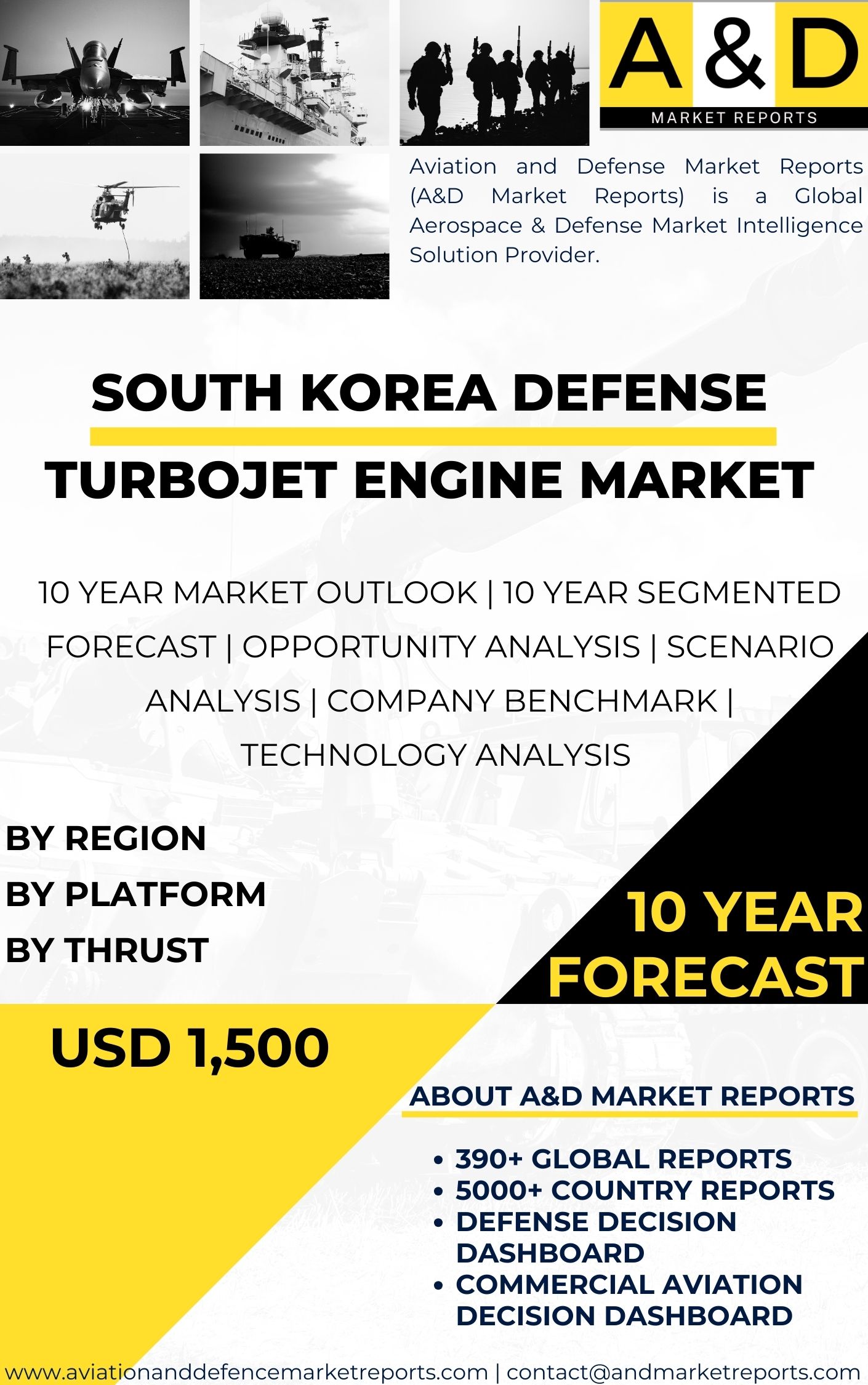
South Korea Defense Turbojet Engine Market Overview
The South Korea defense turbojet engine market is a critical segment of the country’s aerospace and defense ecosystem, providing high-thrust propulsion systems for advanced military aircraft. These engines are designed to deliver superior speed, acceleration, and operational performance, enabling mission capabilities such as air combat, reconnaissance, interception, and precision strike operations. South Korea is increasingly focusing on indigenous development and advanced engineering to strengthen its self-reliance in propulsion technology and reduce dependency on foreign engine suppliers.
Role of Turbojet Engines in Military Aviation
Turbojet engines play an essential role in modern military aviation by enabling aircraft to achieve high-speed flight and rapid response capabilities required in combat scenarios. They provide consistent thrust performance under extreme operating conditions, allowing aircraft to perform complex missions across different altitudes and environments. The South Korea defense turbojet engine market supports both manned fighter aircraft and unmanned aerial platforms, contributing significantly to overall air force readiness and operational flexibility.
Performance and Reliability Requirements
Military turbojet engines must meet extremely high standards of performance, reliability, and durability, as they operate under intense heat, pressure, and mechanical stress. These engines are expected to maintain stable thrust output during prolonged missions while ensuring fuel efficiency and operational safety. Any performance failure can directly impact mission success, making reliability testing and precision engineering critical components of engine development in South Korea’s defense sector.
Indigenous Development in the South Korea Defense Turbojet Engine Market
Indigenous development is a strategic priority in South Korea’s defense turbojet engine market, with companies such as Hanwha Aerospace and LIG Nex1 actively contributing to engine design, development, and manufacturing programs. Local production efforts enhance national security by reducing reliance on imported propulsion systems and strengthening supply chain stability. This also enables better customization of engines to meet specific military requirements and operational environments.
Military Applications and Fleet Support
The South Korean military relies heavily on turbojet engines to power fighter aircraft and advanced UAV platforms, ensuring superior maneuverability, range, and combat effectiveness. These engines are integral to modernizing air force capabilities and supporting next-generation defense platforms such as advanced fighter jets and unmanned combat systems. The South Korea defense turbojet engine market therefore plays a central role in strengthening air superiority and mission readiness.
Research and Development Initiatives
Research and development activities in South Korea focus on improving turbojet engine efficiency, durability, and performance while reducing maintenance requirements and operational costs. Engineers are actively exploring advanced materials, thermal resistance technologies, and optimized combustion systems to enhance engine life cycles. Continuous R&D investment ensures that South Korea remains competitive in advanced propulsion technologies and supports long-term defense innovation.
Strategic Partnerships and Collaboration
Strategic partnerships between defense manufacturers, research institutions, and international technology providers are essential for advancing turbojet engine capabilities in South Korea. These collaborations facilitate knowledge exchange, joint development programs, and accelerated innovation cycles. They also improve system integration across aircraft platforms, ensuring compatibility and operational efficiency in complex defense environments.
Testing, Quality Control, and Safety Standards
Strict testing and quality control processes are essential in the development of turbojet engines to ensure reliability, safety, and consistent performance under operational conditions. Each engine undergoes rigorous endurance testing, performance validation, and environmental stress analysis before deployment. These safety and certification processes are critical in minimizing operational risks and ensuring long-term mission readiness for military aviation platforms.
Civilian Technology Applications
Although primarily developed for defense applications, turbojet engine technologies also contribute to civilian aerospace advancements by improving efficiency, material performance, and engineering design practices. These technological spillovers help enhance commercial aviation capabilities and strengthen South Korea’s broader aerospace engineering expertise. This cross-sector application supports innovation and long-term industrial development.
Conclusion
The South Korea defense turbojet engine market is a strategic pillar of the country’s aerospace modernization efforts, enabling high-performance military aviation capabilities and strengthening national defense readiness. Continued indigenous development, advanced research initiatives, and international collaboration are driving improvements in engine performance and reliability. As South Korea expands its defense capabilities, turbojet engine technology will remain central to achieving long-term air superiority and technological independence.