
Description
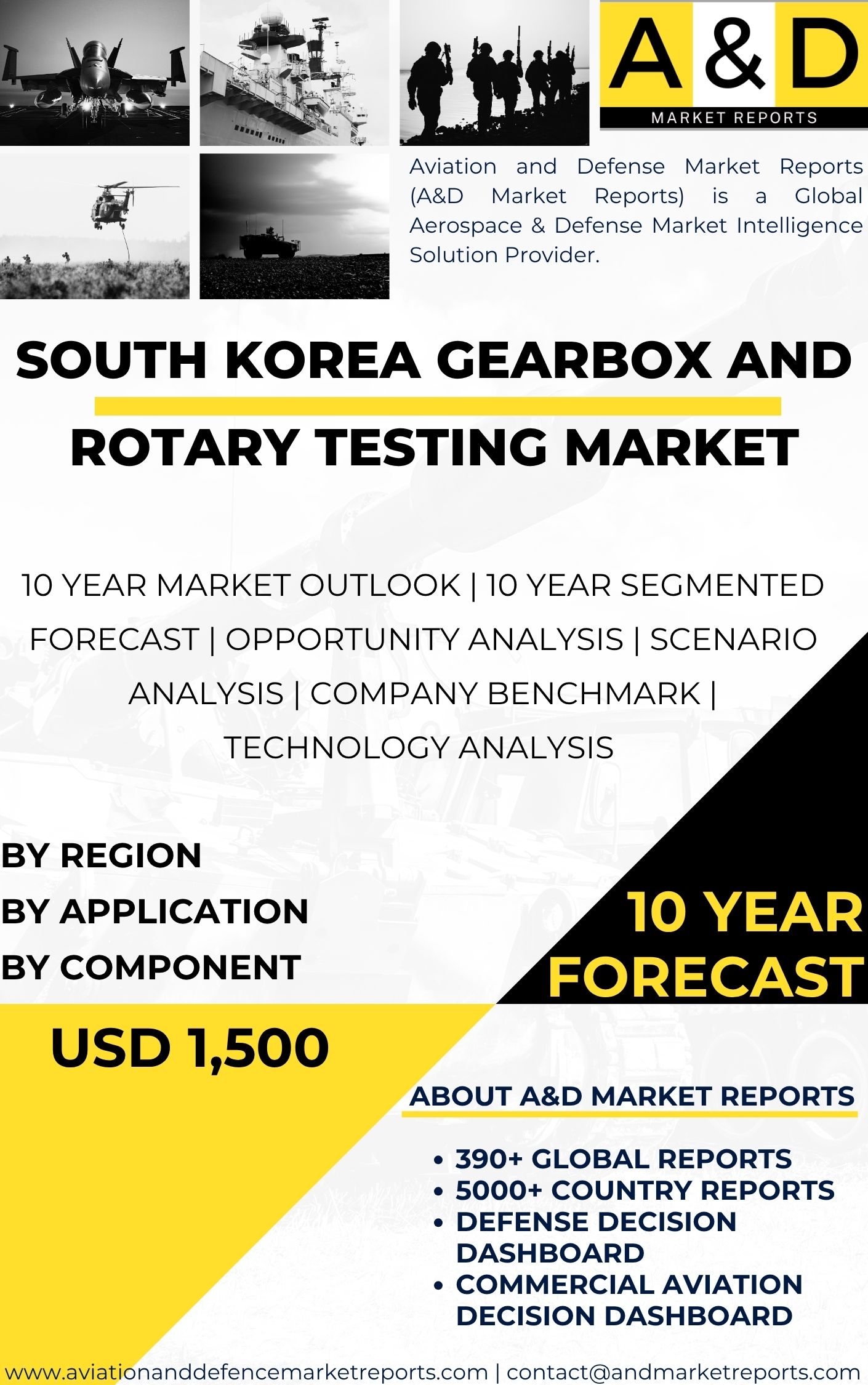
Gearbox and Rotary Testing Market in South Korea Overview
The Gearbox and Rotary Testing Market in South Korea plays a critical role in supporting the country’s industrial, automotive, aerospace, and defense sectors. Gearboxes and rotary components are essential for transmitting, controlling, and optimizing mechanical power across a wide range of applications, including vehicles, aircraft, naval platforms, industrial machinery, and renewable energy systems. As South Korea continues to strengthen its advanced manufacturing capabilities, the demand for accurate and reliable testing solutions continues to rise. Testing helps manufacturers ensure safety, performance, durability, and operational efficiency while reducing the risk of mechanical failures. Furthermore, increasing system complexity and stricter quality requirements make gearbox and rotary testing a vital part of modern engineering and production processes.
Industrial and Automotive Demand
The growth of South Korea’s industrial and automotive sectors continues to create strong demand for gearbox and rotary testing solutions. Manufacturers increasingly require advanced testing systems to validate the performance of high-precision components before deployment. As production volumes grow and performance expectations increase, testing technologies play a larger role in maintaining quality standards and improving product reliability. In addition, ongoing investments in automation, electrification, and smart manufacturing further strengthen the importance of comprehensive testing capabilities across multiple industries.
Automotive Manufacturing Applications
The automotive industry remains one of the largest contributors to the Gearbox and Rotary Testing Market in South Korea. Major vehicle manufacturers such as Hyundai Motor Company and Kia Corporation rely heavily on precision gear systems for transmissions, powertrains, and drivetrain components. The rapid growth of electric and hybrid vehicles has increased the need for advanced gearbox designs that deliver high efficiency, smooth torque transmission, and reduced operational noise. Testing systems evaluate vibration levels, thermal performance, gear wear, and energy transfer efficiency to ensure compliance with performance and environmental standards. As a result, automotive manufacturers continue to invest in sophisticated testing equipment to support next-generation vehicle development.
Machinery and Industrial Equipment
Industrial machinery applications also contribute significantly to market growth. Heavy-duty gearboxes operate under continuous loads in manufacturing plants, logistics facilities, mining operations, and automated production environments. Testing solutions verify durability, load-bearing capability, wear resistance, and long-term reliability under demanding operating conditions. These evaluations help reduce unexpected equipment failures and minimize costly production interruptions. Furthermore, the expansion of smart factories and industrial automation systems increases the need for highly accurate gearbox testing, as robotic systems and automated equipment depend on precise motion control and consistent mechanical performance.
Aerospace and Defense Applications
South Korea’s growing aerospace and defense sectors continue to generate strong demand for advanced gearbox and rotary testing technologies. Military aircraft, helicopters, unmanned aerial vehicles, naval propulsion systems, and missile launch platforms all rely on sophisticated rotary components that must perform reliably under extreme environmental and operational conditions. Testing validates component durability, torque capacity, vibration resistance, and thermal stability. As defense modernization programs expand, manufacturers require increasingly advanced testing solutions to ensure mission-critical reliability and operational safety.
Military and Aerospace Platforms
Aerospace and defense platforms require extensive gearbox testing to meet stringent safety and performance requirements. Helicopter transmission systems, UAV propulsion units, naval drive systems, and aircraft actuators must withstand high stress while maintaining consistent performance. South Korea’s indigenous defense programs, including the KF-21 Boramae fighter aircraft project, have increased demand for local testing capabilities. Engineers evaluate vibration behavior, acoustic performance, lubrication effectiveness, and thermal management to verify system integrity. These testing processes help ensure reliable operation during complex military missions and demanding flight conditions.
Testing Technology and Digital Tools
Technological advancements are transforming gearbox and rotary testing across South Korea. Modern testing facilities increasingly use automated platforms, intelligent sensors, and digital monitoring tools to improve testing accuracy and efficiency. Advanced software systems collect and analyze large volumes of performance data, enabling engineers to identify issues earlier in the development cycle. These technologies support faster product validation while reducing development costs and improving overall reliability.
Automated Testing Systems
Automated testing systems have become a key component of the Gearbox and Rotary Testing Market in South Korea. Advanced test benches simulate real-world operating conditions by applying controlled loads, speeds, and environmental stresses. Closed-loop testing systems continuously monitor performance and automatically adjust parameters to improve accuracy. Sensors track vibration, noise, temperature, lubrication quality, and torque output in real time. Additionally, artificial intelligence tools analyze performance patterns to identify potential failures before they occur, supporting predictive maintenance strategies and improving long-term reliability.
Digital Twins and Simulation
Digital twin technology is becoming increasingly important in gearbox development and testing. Virtual models allow engineers to simulate operating conditions and predict stress distribution, wear patterns, and component performance before physical prototypes are built. Physical testing then validates these simulations and refines design models. This combination of simulation and testing reduces development costs, shortens product development cycles, and improves overall engineering efficiency. Manufacturers increasingly integrate digital twin platforms into their testing workflows to accelerate certification and product deployment.
Robotics and Precision Manufacturing
The rapid growth of robotics and precision manufacturing creates additional demand for advanced gearbox testing. Robotic systems require compact, high-performance gearboxes capable of delivering smooth and accurate motion control. Testing verifies positioning accuracy, operational stability, and long-term reliability under continuous use. Furthermore, miniaturized gear systems equipped with IoT-enabled monitoring technologies require specialized testing procedures to validate sensor performance and predictive diagnostic capabilities. These trends continue to drive innovation throughout the market.
Renewable Energy and Wind Power
South Korea’s expanding renewable energy sector also supports growth in gearbox testing demand. Offshore and onshore wind turbines rely on large gearboxes that must withstand high torque loads and harsh environmental conditions. Testing evaluates durability, efficiency, vibration behavior, and noise levels to ensure reliable long-term operation. As South Korea continues to increase renewable energy capacity, gearbox testing helps improve system reliability, reduce maintenance costs, and support sustainable energy generation objectives.
Gear Types and System Innovation
Innovation in gear design continues to influence testing requirements across multiple industries. Helical gears are widely used in electric vehicles and aerospace applications because of their smooth and quiet operation. Planetary gears provide high power density and compact designs, making them suitable for robotics, aerospace systems, and industrial equipment. Advanced testing verifies load distribution, efficiency, wear resistance, and structural integrity. In addition, new materials and manufacturing techniques require continuous testing advancements to ensure that innovative designs meet performance expectations.
Market Challenges and Policy Support
The market faces several challenges, including fluctuations in raw material supply, increasing development costs, and shortages of highly skilled technical personnel. However, automation and digital testing technologies help mitigate many of these challenges by improving efficiency and reducing dependence on manual processes. Government support for industrial modernization, advanced manufacturing, defense development, and renewable energy projects continues to encourage investment in testing infrastructure. Research and development initiatives further strengthen South Korea’s position in high-precision testing technologies.
Market Outlook
The Gearbox and Rotary Testing Market in South Korea is expected to maintain steady growth over the coming years. Strong demand from the automotive, aerospace, defense, industrial automation, and renewable energy sectors will continue to drive market expansion. Digital testing platforms, artificial intelligence, predictive maintenance technologies, and simulation tools will further improve testing accuracy and efficiency. As South Korea advances its manufacturing capabilities and strengthens domestic technology development, the market will play an increasingly important role in supporting innovation, reliability, and industrial competitiveness across multiple sectors.