
Description
RF Test Systems Market in South Korea Overview
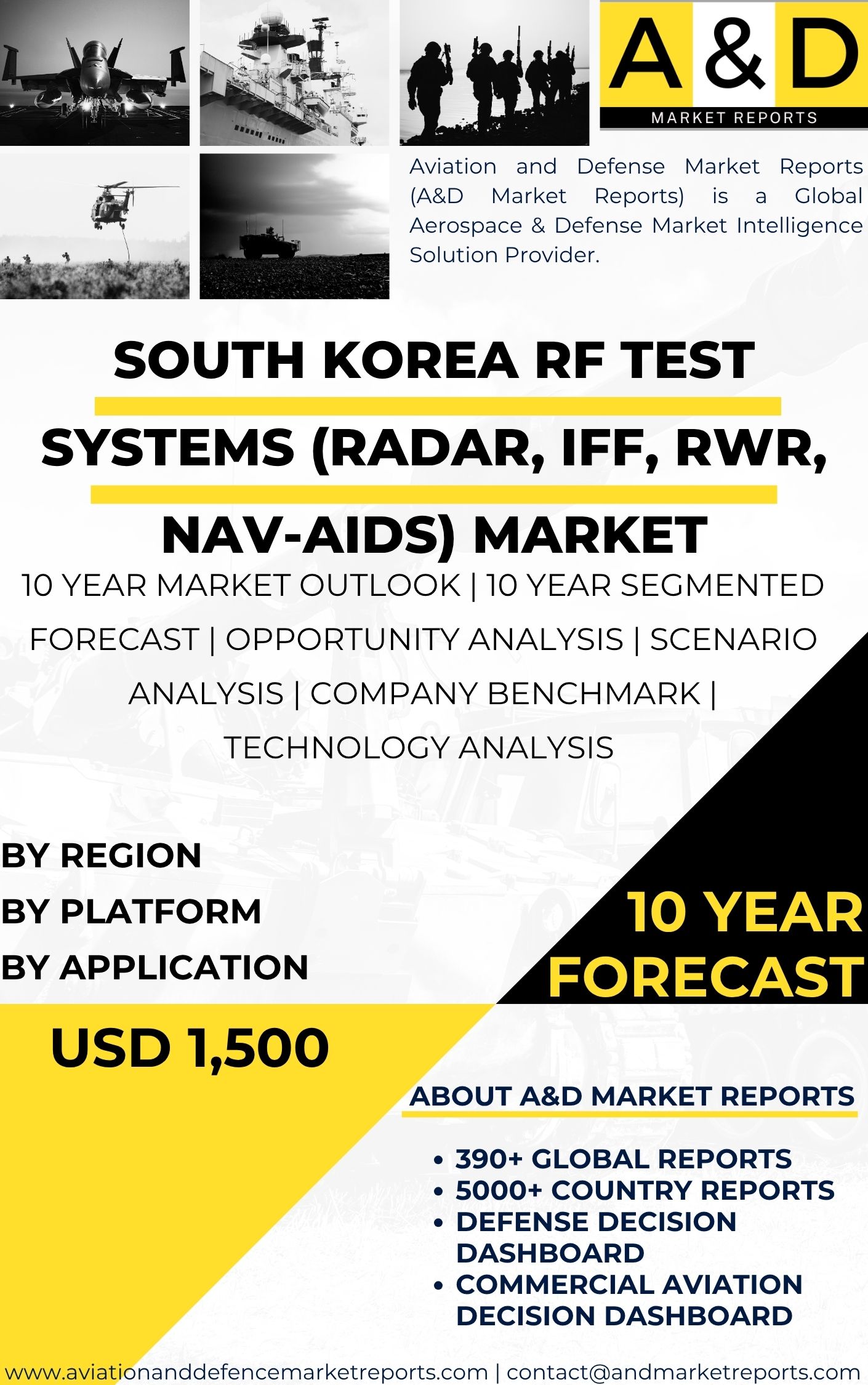
The South Korea RF Test is a critical segment of the country’s aerospace, defense, and electronics testing industry. Radio Frequency (RF) test systems are used to evaluate the performance, accuracy, and reliability of communication, radar, navigation, and electronic warfare equipment deployed across military platforms. These systems support the testing of radar systems, Identification Friend or Foe (IFF) equipment, Radar Warning Receivers (RWRs), tactical communications, navigation aids, and electronic intelligence systems. As South Korea continues to modernize its defense capabilities and develop advanced military technologies, the demand for sophisticated RF testing solutions continues to expand. Reliable RF testing ensures mission-critical systems operate effectively in complex operational environments.
Role of RF Test Systems in Defense Applications
Modern military operations rely heavily on RF-based technologies for surveillance, target detection, communication, navigation, and threat identification. Fighter aircraft, naval vessels, ground-based air defense systems, and command centers all depend on high-performance RF equipment. RF test systems simulate real-world signal environments to validate system performance under operational conditions. Testing helps ensure radar accuracy, communication reliability, and electronic warfare effectiveness. In addition, RF validation reduces the risk of operational failures and improves mission readiness across all defense domains.
Importance of IFF and RWR Testing
Identification Friend or Foe (IFF) systems and Radar Warning Receivers (RWRs) are essential components of modern defense platforms. IFF systems help distinguish friendly assets from potential threats, reducing the risk of friendly-fire incidents during military operations. RWRs provide early warning of enemy radar emissions and potential targeting activities, enhancing platform survivability. RF test systems evaluate these technologies under various signal conditions to verify detection accuracy, response times, and operational reliability. As electronic warfare environments become increasingly complex, comprehensive testing of IFF and RWR systems becomes even more important.
Technology Advancements in RF Test Systems
The RF test systems market in South Korea is benefiting from rapid technological advancement. Modern testing platforms support multi-band, multi-channel, and high-frequency operations, including microwave and millimeter-wave frequencies used in advanced radar and communication systems. Key equipment includes signal generators, spectrum analyzers, network analyzers, vector signal analyzers, and pulse measurement systems. Hardware-in-the-loop testing environments allow engineers to evaluate RF equipment under realistic operational conditions. These capabilities improve testing precision while reducing development and validation timelines.
Market Drivers and Industry Collaboration
Growing defense expenditures and the development of next-generation military systems are driving demand for RF test solutions. Programs involving advanced radar systems, electronic warfare capabilities, secure communications, and integrated air defense networks require extensive RF validation throughout development and production stages. South Korean defense contractors, electronics manufacturers, and research institutions work closely with test equipment suppliers to develop advanced testing solutions. These collaborations encourage innovation, improve system performance, and accelerate product development cycles while supporting indigenous defense capabilities.
Standards, Interoperability, and Compliance
Military RF systems must comply with strict operational and performance standards to ensure reliability and interoperability. South Korean defense programs increasingly align with international military frameworks and allied operational requirements. RF test systems help verify compliance with electromagnetic compatibility standards, communication protocols, and interoperability requirements. This ensures seamless integration between domestic platforms and allied defense networks. Compliance with international standards also enhances export opportunities by making South Korean defense products more attractive in global markets.
Challenges Facing the RF Test Systems Market
The RF testing industry faces several technical and operational challenges. Modern RF environments are becoming increasingly complex due to higher frequencies, wider bandwidths, advanced modulation schemes, and growing electronic warfare threats. Managing electromagnetic interference and accurately replicating real-world operational conditions require sophisticated testing infrastructure. High equipment costs and the need for specialized technical expertise also present challenges for manufacturers and defense organizations. Despite these obstacles, continued investment in research and development is helping the industry address emerging testing requirements.
Sustainability and Digital Transformation Trends
Sustainability is becoming an important consideration within the RF testing sector. Manufacturers are exploring energy-efficient testing equipment and optimizing laboratory operations to reduce power consumption. Digital technologies such as automation, artificial intelligence, and advanced analytics are also transforming testing processes. AI-assisted diagnostics can identify anomalies more quickly, while automated testing systems improve productivity and consistency. Digital transformation helps reduce testing costs while increasing overall accuracy and operational efficiency.
Future Outlook of the RF Test Systems Market in South Korea
The RF test systems market in South Korea is expected to experience steady growth as defense modernization, aerospace development, and electronic warfare capabilities continue to advance. Emerging technologies such as active electronically scanned array (AESA) radars, advanced communication networks, unmanned systems, and next-generation navigation solutions will require increasingly sophisticated RF testing environments. Continued investment in automation, simulation technologies, and high-frequency testing capabilities will support future market expansion. As South Korea strengthens its defense and aerospace industries, RF test systems will remain essential for ensuring system reliability, operational readiness, and technological competitiveness.