
Description
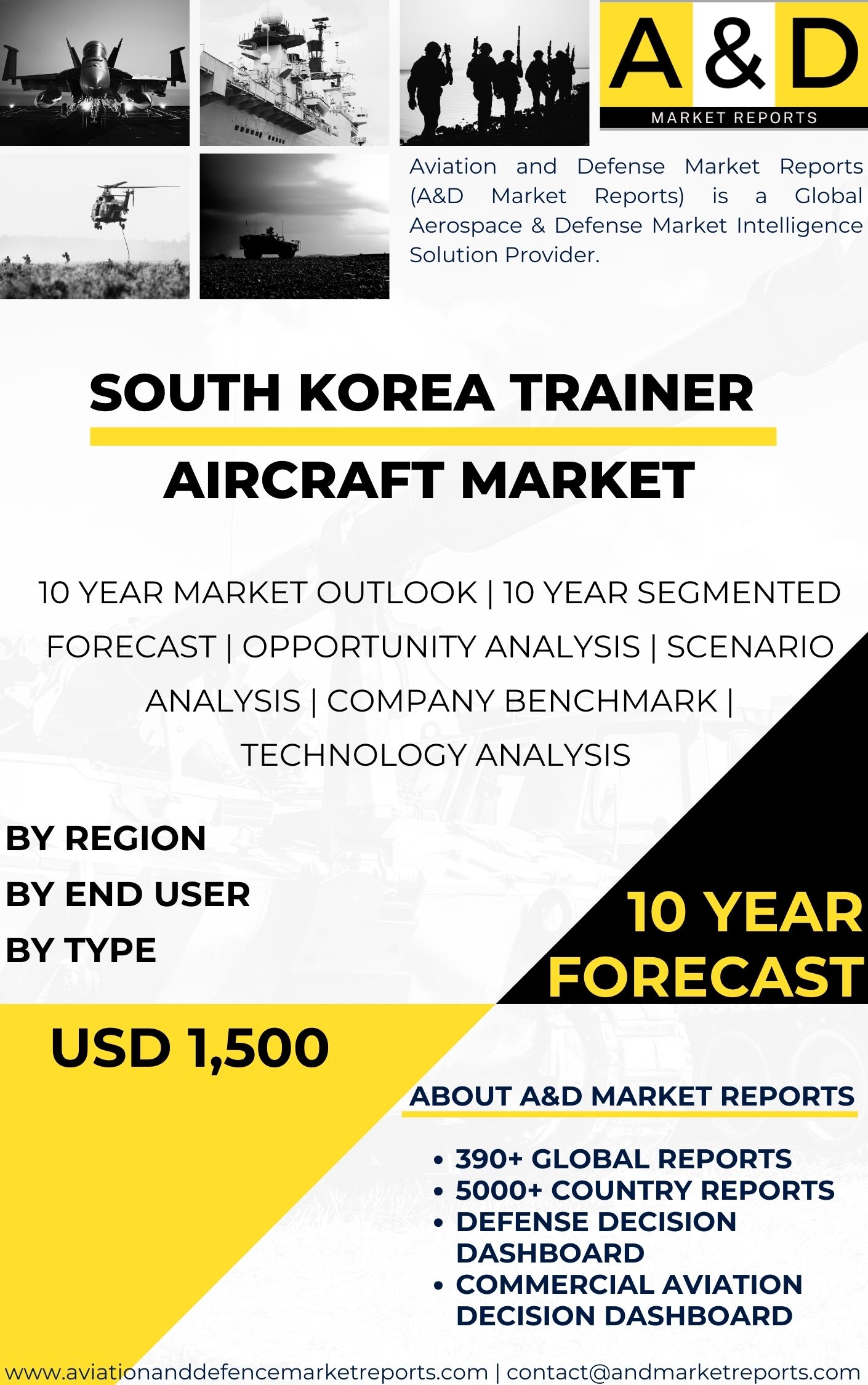
South Korea Trainer Aircraft Market Overview
The South Korea trainer aircraft market is a critical segment of the nation’s aerospace and defense industry. It plays a fundamental role in preparing future military aviators and maintaining the operational readiness of the air force. Trainer aircraft provide a structured learning environment where pilots can develop essential flying skills before transitioning to advanced combat aircraft. These platforms are designed to simulate real-world flight conditions while maintaining high levels of safety and efficiency. As South Korea continues to modernize its air capabilities, investment in trainer aircraft remains a strategic priority. Indigenous development, technological innovation, and advanced training methodologies continue to support market growth and strengthen national defense capabilities.
Role of Trainer Aircraft in Pilot Training
Trainer aircraft serve as the foundation of military pilot education and development. They allow trainee pilots to learn basic flight operations, navigation, communication procedures, and aircraft handling techniques in a controlled environment. These aircraft support progressive training programs that gradually increase in complexity as pilots gain experience and confidence. Trainer aircraft also help pilots develop decision-making skills and situational awareness, which are essential for modern combat operations. Through repeated practice and structured instruction, pilots can master critical flight maneuvers before advancing to frontline fighter and transport aircraft. This training process significantly improves operational effectiveness and flight safety.
Indigenous Development of Trainer Aircraft
Indigenous production plays a major role in the South Korea trainer aircraft market. Korea Aerospace Industries (KAI) has been at the forefront of developing advanced trainer aircraft tailored to the requirements of the South Korean Air Force. Locally designed platforms allow South Korea to maintain greater control over production schedules, technology upgrades, and maintenance support. Domestic manufacturing also strengthens the country’s aerospace ecosystem by creating skilled jobs and supporting research and development activities. By reducing dependence on foreign suppliers, indigenous development enhances national security and ensures long-term sustainability in military aviation training programs.
South Korean Air Force Training Programs
The South Korean Air Force relies extensively on trainer aircraft to prepare pilots for operational duties. Training programs are structured in multiple phases, beginning with basic flight instruction and progressing to advanced jet training. During these stages, pilots learn aircraft systems management, instrument flying, formation flying, and tactical procedures. Modern trainer aircraft provide realistic flight characteristics that closely resemble those of frontline combat aircraft, making the transition smoother and more effective. These programs ensure that pilots are fully prepared to operate sophisticated military platforms and perform complex missions. Comprehensive training contributes significantly to maintaining high levels of combat readiness and mission success.
Civilian Applications of Trainer Aircraft
In addition to military use, trainer aircraft support a variety of civilian aviation activities across South Korea. Flight academies and aviation training institutions use these aircraft to educate aspiring commercial and private pilots. Trainer aircraft provide a cost-effective platform for teaching aviation fundamentals, navigation skills, and emergency procedures. They are also used for proficiency training and certification programs within the civil aviation sector. The growing demand for skilled pilots in commercial aviation continues to support the use of trainer aircraft beyond military applications. This broader utilization helps maximize the value of training platforms and contributes to the overall development of South Korea’s aviation industry.
Research and Development Initiatives
Research and development remain key drivers of innovation in the South Korea trainer aircraft market. Significant investments are directed toward improving aircraft performance, safety, and training effectiveness. Engineers focus on developing advanced avionics, digital cockpits, and integrated training systems that better prepare pilots for modern operational environments. Simulation technologies are increasingly incorporated into training programs to complement live flight instruction. R&D efforts also emphasize fuel efficiency, reduced operating costs, and enhanced maintenance capabilities. These innovations ensure that trainer aircraft remain relevant and capable of meeting future training requirements.
Strategic Partnerships and Collaboration
Strategic partnerships contribute significantly to the advancement of trainer aircraft technologies in South Korea. Collaboration between domestic aerospace companies, government agencies, academic institutions, and international defense firms facilitates knowledge sharing and technological development. Joint research projects enable access to advanced avionics, simulation technologies, and aircraft systems. Technology transfer agreements help accelerate innovation while strengthening local manufacturing capabilities. These partnerships also support export opportunities by improving product quality and competitiveness in international markets. Through cooperation and collaboration, South Korea continues to enhance its position as a leading aerospace developer.
Pilot Training and Skill Development
Developing highly skilled pilots remains a top priority for South Korea’s military aviation sector. Training programs focus on building strong foundational skills while gradually introducing more complex operational scenarios. Instructors guide pilots through flight planning, navigation, emergency response procedures, and tactical mission execution. Advanced training exercises simulate realistic combat and operational environments, helping pilots gain valuable experience before transitioning to frontline aircraft. Continuous skill development ensures that pilots remain proficient throughout their careers. This commitment to training excellence contributes directly to mission success and national defense readiness.
Safety and Maintenance Standards
Safety is a fundamental aspect of trainer aircraft operations. South Korea enforces strict aviation safety regulations to protect pilots, instructors, and support personnel. Regular inspections, preventive maintenance programs, and rigorous quality control measures help ensure aircraft reliability and operational availability. Modern trainer aircraft incorporate advanced safety systems such as ejection seats, flight monitoring technologies, and emergency recovery features. Maintenance personnel receive specialized training to manage sophisticated aircraft systems effectively. These comprehensive safety and maintenance practices reduce operational risks and support uninterrupted training activities.
Technology Trends and Future Opportunities
Emerging technologies are expected to shape the future of the South Korea trainer aircraft market. Artificial intelligence, virtual reality, and advanced simulation systems are becoming increasingly important components of pilot training programs. Digital training environments allow pilots to practice complex missions in realistic scenarios while minimizing operational costs. Networked training systems enable collaborative exercises involving multiple aircraft and training centers. The integration of data analytics helps instructors monitor pilot performance and customize training plans. These technological advancements will further improve training effectiveness and support the evolving needs of military aviation.
Conclusion
The South Korea trainer aircraft market remains a cornerstone of the nation’s aerospace and defense capabilities. Trainer aircraft play a vital role in developing skilled pilots, maintaining combat readiness, and supporting the long-term effectiveness of the air force. Indigenous development, research and development investments, and strategic partnerships continue to drive innovation and strengthen domestic aerospace expertise. Beyond military applications, trainer aircraft also contribute to civilian aviation training and workforce development. As technology advances and operational requirements evolve, continued investment in trainer aircraft and pilot training systems will ensure that South Korea maintains a highly capable and well-prepared aviation force for the future.