
Description
Spain’s 105mm Market Overview
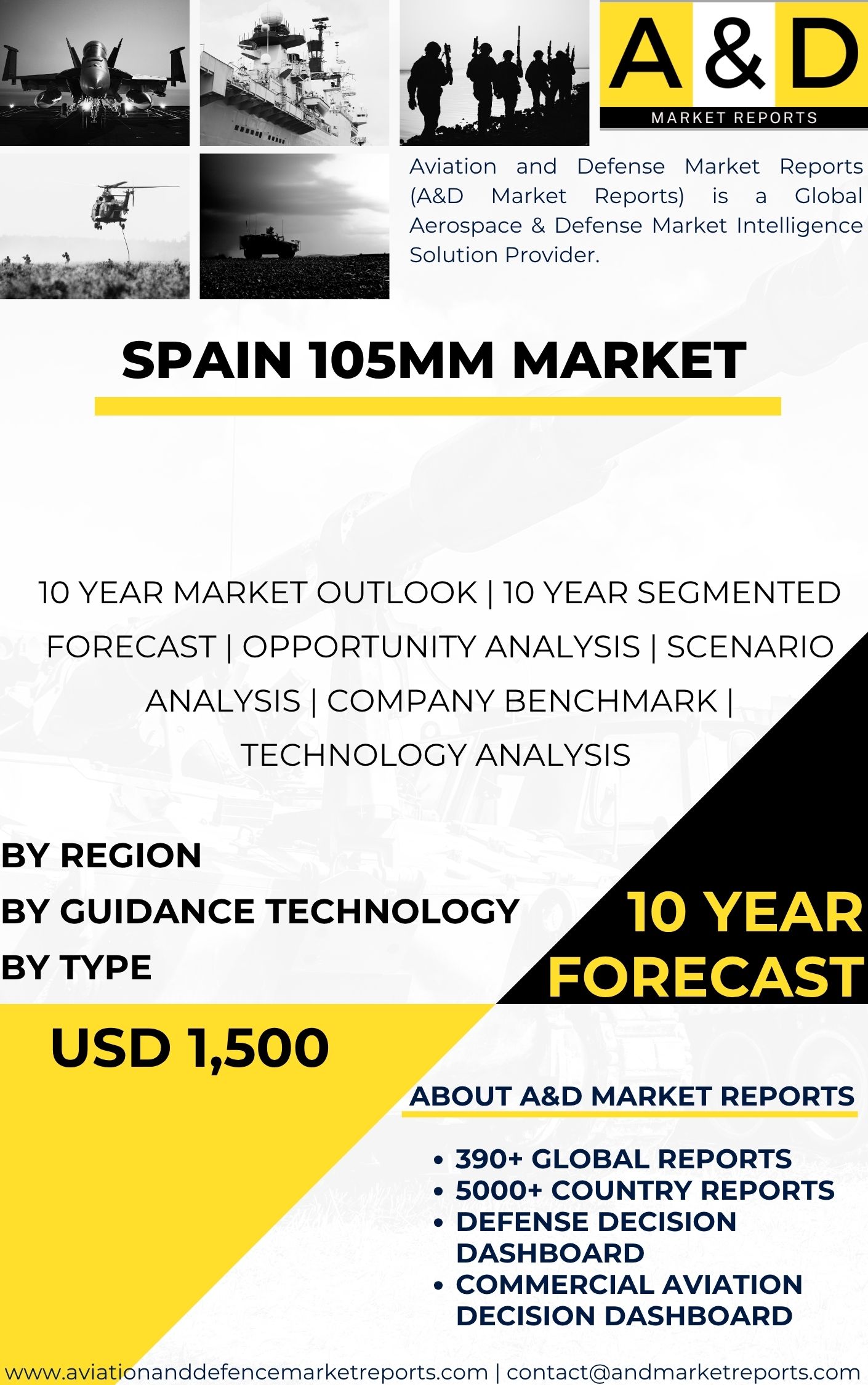
Spain 105mm Market remains an important part of the country’s artillery and medium-caliber weapons sector. The 105mm caliber offers a strong balance between mobility, range, and destructive capability. Because of this balance, the Spanish Armed Forces continue to rely on these systems for different battlefield operations. The market supports both field artillery and armored vehicle platforms used across multiple operational environments. In addition, Spain continues to invest in modernization programs that improve artillery mobility, accuracy, and firepower. NATO interoperability requirements also influence procurement decisions, ensuring Spanish systems remain compatible with allied forces. As regional security concerns evolve, Spain continues to strengthen its medium-caliber artillery capabilities to maintain operational readiness and tactical flexibility.
Role of 105mm Weapons in Military Operations
The 105mm caliber plays a major role in supporting infantry, mechanized forces, and armored units during combat operations. These weapons provide effective indirect fire support and help suppress enemy positions at medium and long ranges. Furthermore, the relatively lighter weight of 105mm systems compared to larger artillery platforms improves deployment speed and battlefield mobility. Spanish forces can quickly reposition these systems in mountainous, urban, or difficult terrain conditions. This flexibility makes the caliber valuable during rapid-response missions and expeditionary operations. Additionally, 105mm artillery supports both offensive assaults and defensive missions by delivering accurate and sustained firepower against enemy formations, fortifications, and light armored vehicles.
Weapon Platforms and System Integration
Spain’s 105mm market includes a broad range of artillery platforms and gun systems. These include towed howitzers, self-propelled artillery systems, and tank-mounted guns. Towed artillery remains important because it offers lower operational costs and easier transportation. Meanwhile, self-propelled systems provide faster mobility, protection, and quicker firing capability during active combat operations. Tank-mounted 105mm guns also continue to serve on selected armored platforms, especially in missions requiring reliable medium-caliber firepower. In addition, modern integration efforts focus on combining these systems with digital communication networks, advanced targeting software, and battlefield management systems. This integration improves coordination between artillery units and other combat formations, allowing faster target engagement and improved operational efficiency.
Ammunition Types and Combat Capabilities
The Spanish 105mm market supports multiple ammunition categories designed for different operational needs. High-explosive rounds remain the most commonly used ammunition type because they provide strong blast and fragmentation effects against enemy troops and defensive positions. Armor-piercing ammunition is used against lightly armored vehicles and fortified targets. Smoke rounds create concealment during troop movement and tactical repositioning, while illumination rounds support night operations and battlefield visibility. Practice rounds also play an essential role by allowing crews to conduct realistic training exercises without the cost of live combat ammunition. Moreover, modern ammunition designs now include improved aerodynamics, better explosive materials, and enhanced fuze systems. These advancements improve range, precision, and battlefield effectiveness under different combat conditions.
Technological Advancements in the Market
Technology continues to reshape Spain’s 105mm artillery market. Modern systems now incorporate digital fire control systems, automated loading mechanisms, and precision-guided munitions. These upgrades improve firing accuracy and reduce response times during combat operations. In addition, advanced ballistic computers help artillery crews calculate firing solutions faster and more accurately. Precision-guided ammunition also increases operational efficiency by reducing ammunition waste and limiting collateral damage. Furthermore, improved stabilization systems allow artillery platforms to maintain accuracy even during rapid movement or harsh environmental conditions. Spain also benefits from European defense cooperation programs that support research and development activities focused on modular and upgradeable artillery technologies.
NATO Cooperation and Interoperability
NATO cooperation remains a major factor influencing Spain’s 105mm market development. Spain participates regularly in multinational military exercises and joint defense programs with allied nations. Therefore, Spanish artillery systems must meet NATO-standard ammunition and communication requirements. Standardization improves interoperability between allied forces during coalition missions and international operations. Additionally, shared operational standards simplify logistics, maintenance, and ammunition compatibility during combined deployments. Spain also works closely with European defense manufacturers and military partners to improve artillery integration, communication systems, and targeting technologies. These partnerships strengthen operational coordination and improve collective defense readiness across NATO member states.
Training, Simulation, and Operational Readiness
Training and simulation programs are essential for maintaining the effectiveness of Spain’s 105mm artillery forces. Artillery crews receive continuous instruction in gun handling, targeting procedures, ammunition management, and fire coordination techniques. Modern simulation technologies allow personnel to practice realistic combat scenarios without the expense of live-fire exercises. In addition, digital training systems improve reaction speed, decision-making, and operational coordination under battlefield conditions. Spanish forces also conduct multinational training exercises to strengthen interoperability with allied units. These exercises help artillery operators adapt to different operational environments while improving overall combat readiness and tactical performance.
Market Challenges and Operational Constraints
Despite steady modernization efforts, Spain’s 105mm market faces several operational and financial challenges. Advanced artillery systems and precision-guided ammunition require significant investment in development, procurement, and maintenance. Budget limitations can affect modernization timelines and procurement volumes. In addition, integrating sophisticated fire control systems and communication technologies increases technical complexity. Ammunition storage, transportation, and supply chain management also remain critical concerns for maintaining operational readiness. Environmental regulations and safety standards further influence manufacturing and testing procedures. However, ongoing defense investments and NATO commitments continue to support the long-term growth and sustainability of Spain’s 105mm artillery market.
Future Outlook of Spain’s 105mm Market
The future of Spain’s 105mm market appears stable as modernization programs continue across the Spanish Armed Forces. Demand for mobile, accurate, and adaptable artillery systems is expected to remain strong in the coming years. Furthermore, improvements in digital targeting, precision-guided munitions, and automated fire control technologies will continue to enhance battlefield effectiveness. Spain’s participation in European defense initiatives and NATO operations will also encourage further investment in interoperable artillery systems. As military technology evolves, the 105mm caliber will continue to provide Spain with a flexible and reliable medium-caliber firepower capability suitable for modern combat environments and multinational operations.