
Description
Spain Airborne Missile Protection System Market Overview
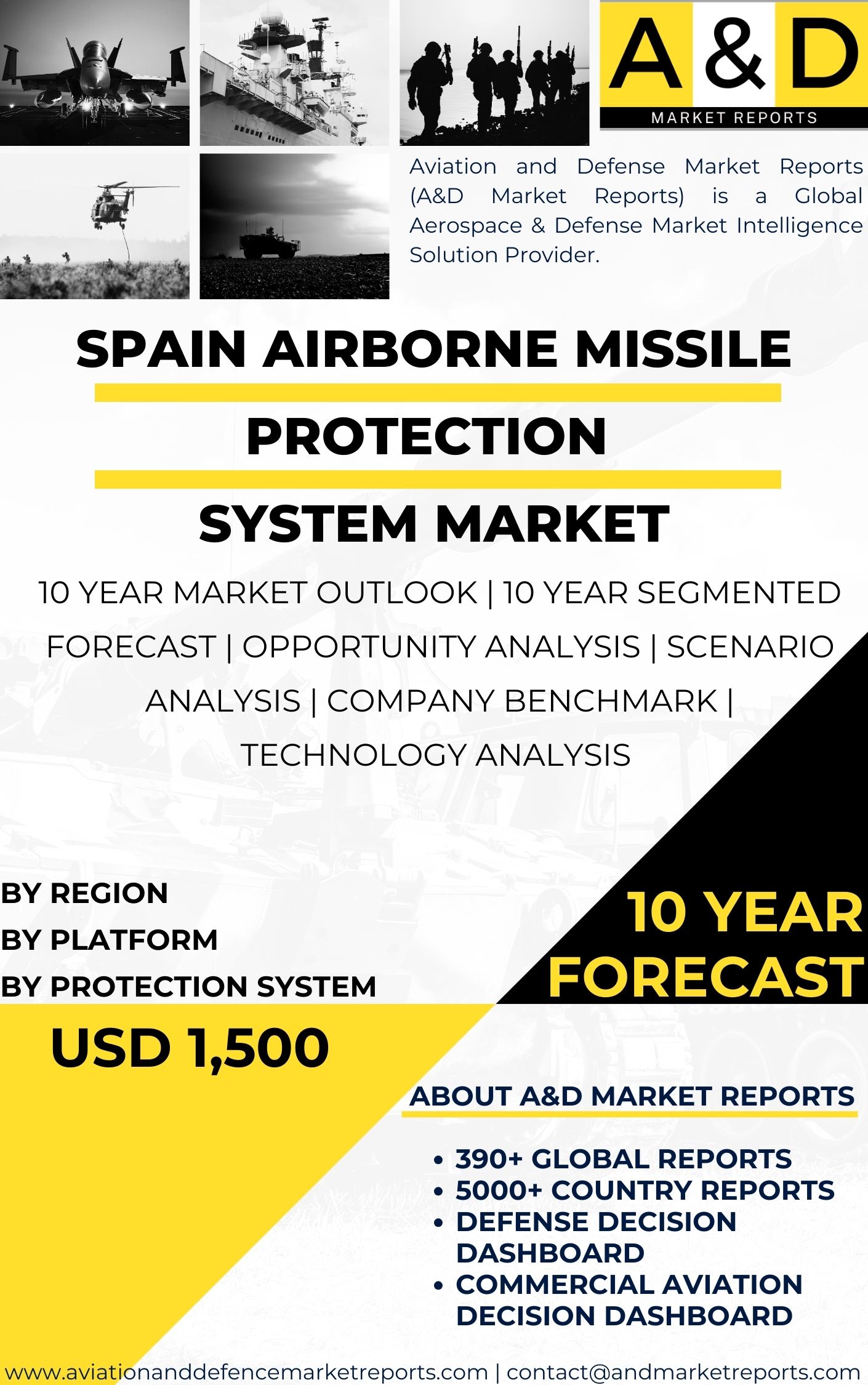
The Spain Airborne Missile Protection System Market is an important part of the country’s defense industry. These protection systems are designed to detect, track, and defeat incoming missile threats during aerial missions. They improve the survivability of military aircraft and help pilots operate safely in hostile environments. The market is growing steadily as Spain continues to modernize its air force and strengthen national defense capabilities. In addition, rising geopolitical tensions and evolving aerial threats are increasing the demand for advanced airborne protection technologies.
Defense Modernization Driving Market Growth
Spain’s ongoing military modernization programs are a major factor supporting market expansion. The Spanish Air Force is investing in advanced protection systems to upgrade existing aircraft fleets and improve operational readiness. These systems help aircraft survive against modern missile threats during combat and surveillance missions. Furthermore, modernization efforts focus on improving aircraft safety, mission efficiency, and long-term operational capability across multiple defense platforms.
Rising Missile Threats Increasing Demand
Modern warfare has become more dangerous due to the growing use of advanced missile systems. Infrared-guided missiles, radar-guided missiles, and laser-guided weapons pose serious threats to military aircraft. Airborne missile protection systems help detect these threats early and provide defensive countermeasures to reduce risk. As missile technologies continue to improve worldwide, the demand for reliable airborne protection systems in Spain is expected to increase significantly.
Technological Advancements Enhancing System Performance
Rapid advancements in defense technology have improved the performance and reliability of airborne missile protection systems. Modern systems use radar warning receivers, missile approach warning systems, electronic warfare suites, infrared countermeasures, and decoy technologies to protect aircraft from attacks. These advanced systems improve threat detection accuracy and response speed during combat operations. In addition, artificial intelligence and sensor fusion technologies are helping create smarter and more efficient defense solutions for military aircraft.
Importance in Modern Air Warfare
Airborne missile protection systems play a critical role in modern aerial combat operations. These systems help pilots operate safely in contested airspace and hostile environments where missile threats are present. Furthermore, they improve the survivability of aircraft involved in reconnaissance, transport, rescue, and combat missions. By increasing aircraft protection levels, these systems support mission success and reduce the risk of aircraft losses during military operations.
Versatility Across Different Aircraft Platforms
One of the major strengths of airborne missile protection systems is their adaptability across various aircraft types. These systems can be installed on fighter jets, transport aircraft, surveillance aircraft, helicopters, and special mission platforms. This flexibility allows the Spanish Air Force to strengthen protection capabilities across its entire fleet. Additionally, modular system designs make upgrades and integration easier for future aircraft modernization programs.
Support for International Military Operations
Spain’s participation in NATO missions and multinational military operations also supports market growth. Interoperable airborne protection systems improve coordination between allied air forces during coalition operations and joint exercises. Standardized technologies allow aircraft from different countries to operate together more effectively in complex combat environments. Furthermore, international cooperation encourages technology sharing, defense partnerships, and joint research programs that benefit the Spanish defense industry.
Integration and Compatibility Challenges
Despite strong market growth, system integration remains a significant challenge. Different aircraft platforms require customized integration processes to ensure proper communication between onboard systems and missile protection technologies. Compatibility issues can increase installation complexity and operational costs. Therefore, defense manufacturers continue to focus on developing flexible and scalable solutions that support multiple aircraft configurations and mission requirements.
Budget Constraints and Financial Planning
Advanced airborne missile protection systems are expensive to develop, acquire, and maintain. Budget limitations can affect procurement schedules and modernization plans within the Spanish defense sector. Governments and defense organizations must carefully balance operational needs with long-term financial sustainability. In addition, maintenance, software updates, and training programs require continuous investment to keep systems operational and effective over time.
Training and Operational Complexity
Modern missile protection systems are highly sophisticated and require specialized training for pilots, technicians, and support crews. Aircrews must understand how to operate defensive systems during high-pressure combat situations. Maintenance teams also need advanced technical knowledge to ensure system reliability and performance. As a result, Spain continues to invest in simulation training, technical education, and operational support programs to improve readiness and system effectiveness.
Cybersecurity and Electronic Warfare Risks
The growing use of digital technologies in airborne defense systems has increased cybersecurity concerns. Missile protection systems may face cyberattacks, electronic interference, and jamming attempts from hostile forces. Therefore, strong encryption methods, secure communication systems, and electronic protection technologies are essential for safeguarding aircraft systems. Strengthening cybersecurity capabilities has become a key priority for modern airborne defense strategies.
Regulatory Compliance and Export Controls
The Spain Airborne Missile Protection System Market must comply with strict international defense regulations and export control policies. These systems involve highly sensitive military technologies that require careful monitoring and responsible management. Compliance with international standards supports transparency, strengthens defense partnerships, and promotes responsible arms transfer practices. In addition, regulatory compliance helps Spanish defense manufacturers participate in global defense programs and export opportunities.
Future Outlook of the Market
The future of the Spain Airborne Missile Protection System Market remains highly positive due to increasing defense investments and growing security concerns. Future systems are expected to include artificial intelligence, autonomous threat analysis, advanced sensors, and next-generation electronic warfare capabilities. These innovations will improve aircraft survivability and operational performance even further. As aerial warfare technologies continue to evolve, airborne missile protection systems will remain a critical part of Spain’s military modernization strategy and future air defense operations.