
Description
Spain’s Situational Awareness Market Overview
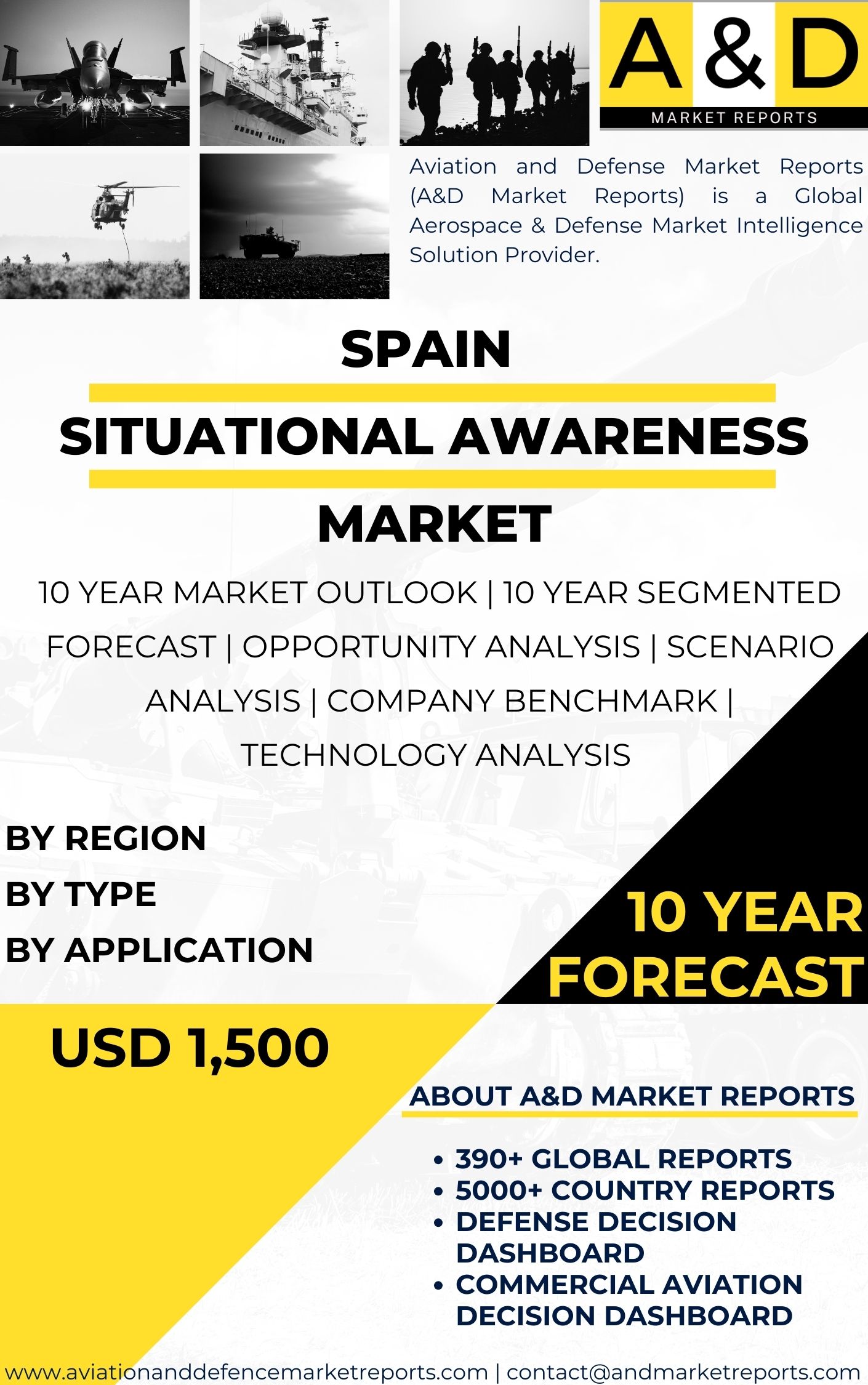
Spain Situational Awareness Market is growing steadily as the country strengthens its defense and homeland security capabilities. Situational awareness systems help military forces, law enforcement agencies, and emergency response teams detect, monitor, and respond to threats in real time. These systems improve decision-making by providing accurate information from multiple sources, including radar, sensors, satellites, drones, and communication networks. As security threats become more complex, Spain continues to invest in advanced technologies that improve surveillance, intelligence gathering, and operational coordination across land, air, sea, cyber, and space domains.
Defense Modernization Driving Market Growth
Spain’s defense modernization programs are a major factor supporting the growth of the situational awareness market. The Spanish government is increasing investments in advanced monitoring and command systems to improve national security and military readiness. The armed forces are adopting modern digital platforms that combine data from radars, satellites, unmanned systems, and battlefield sensors into a unified operational picture. These upgrades help military commanders respond faster and improve coordination during both domestic and international missions. In addition, Spain continues to align its defense capabilities with NATO operational standards, which further increases demand for interoperable situational awareness technologies.
Expansion of Space and Air Surveillance Capabilities
Spain is also strengthening its space and air surveillance capabilities to address modern security challenges. The country has invested in advanced space monitoring programs that support satellite protection, missile tracking, and aerospace surveillance. Space situational awareness systems help monitor orbital activities and detect potential risks to critical space infrastructure. At the same time, Spain is improving airspace monitoring through advanced radar systems, integrated air defense networks, and unmanned aerial surveillance platforms. These technologies provide real-time intelligence and improve the country’s ability to detect unauthorized aircraft, drones, and other airborne threats.
Maritime and Border Security Applications
Maritime and border security remain important areas within Spain’s situational awareness market. Spain’s geographic location makes coastal monitoring and border protection a strategic priority. The country uses advanced coastal radar systems, maritime patrol aircraft, surveillance drones, and sensor networks to monitor shipping routes and detect illegal activities such as smuggling, trafficking, and unauthorized maritime movements. Border security agencies also rely on real-time surveillance systems and communication networks to improve coordination and rapid response capabilities. These technologies strengthen Spain’s ability to maintain national security while supporting regional stability.
Role of Advanced Technologies and Artificial Intelligence
Technological innovation continues to shape the future of Spain’s situational awareness market. Artificial intelligence, machine learning, big data analytics, and cloud-based systems are improving the speed and accuracy of threat detection and information analysis. AI-powered systems can process large volumes of sensor data quickly and identify suspicious activities in real time. In addition, advanced communication networks and secure data-sharing platforms improve coordination between military units, intelligence agencies, and emergency response organizations. Spain is also investing in cybersecurity technologies to protect critical situational awareness systems from cyber threats and electronic interference.
Collaboration With NATO and European Partners
International collaboration plays an important role in Spain’s situational awareness strategy. Spain works closely with NATO allies and European defense organizations to improve intelligence sharing, interoperability, and joint operational readiness. Participation in multinational defense exercises allows Spanish forces to test advanced surveillance and command systems in realistic operational environments. Collaborative research programs also support the development of next-generation situational awareness technologies, including integrated sensor systems, autonomous surveillance platforms, and secure communication networks. These partnerships strengthen Spain’s defense capabilities and improve regional security cooperation.
Industrial Development and Domestic Innovation
Spain’s domestic defense and technology industries contribute significantly to the situational awareness market. Spanish companies develop advanced radar systems, command-and-control software, sensor technologies, communication equipment, and data analytics platforms for military and civilian applications. The country also supports research institutions and innovation centers that focus on surveillance technologies, artificial intelligence, and defense electronics. These investments strengthen Spain’s industrial capabilities and reduce dependence on foreign suppliers for critical security technologies.
Future Outlook of the Spain Situational Awareness Market
The future of Spain’s situational awareness market remains positive due to continued investments in defense modernization, digital technologies, and security infrastructure. Increasing geopolitical tensions, cyber threats, and the growing use of drones and autonomous systems are expected to drive demand for advanced monitoring and intelligence solutions. Spain is likely to expand its capabilities in space surveillance, integrated air defense, maritime monitoring, and AI-powered analytics over the coming years. With strong government support, international cooperation, and ongoing technological innovation, Spain’s situational awareness market is expected to remain an important part of the country’s national defense and security strategy.