
Description
Market Overview
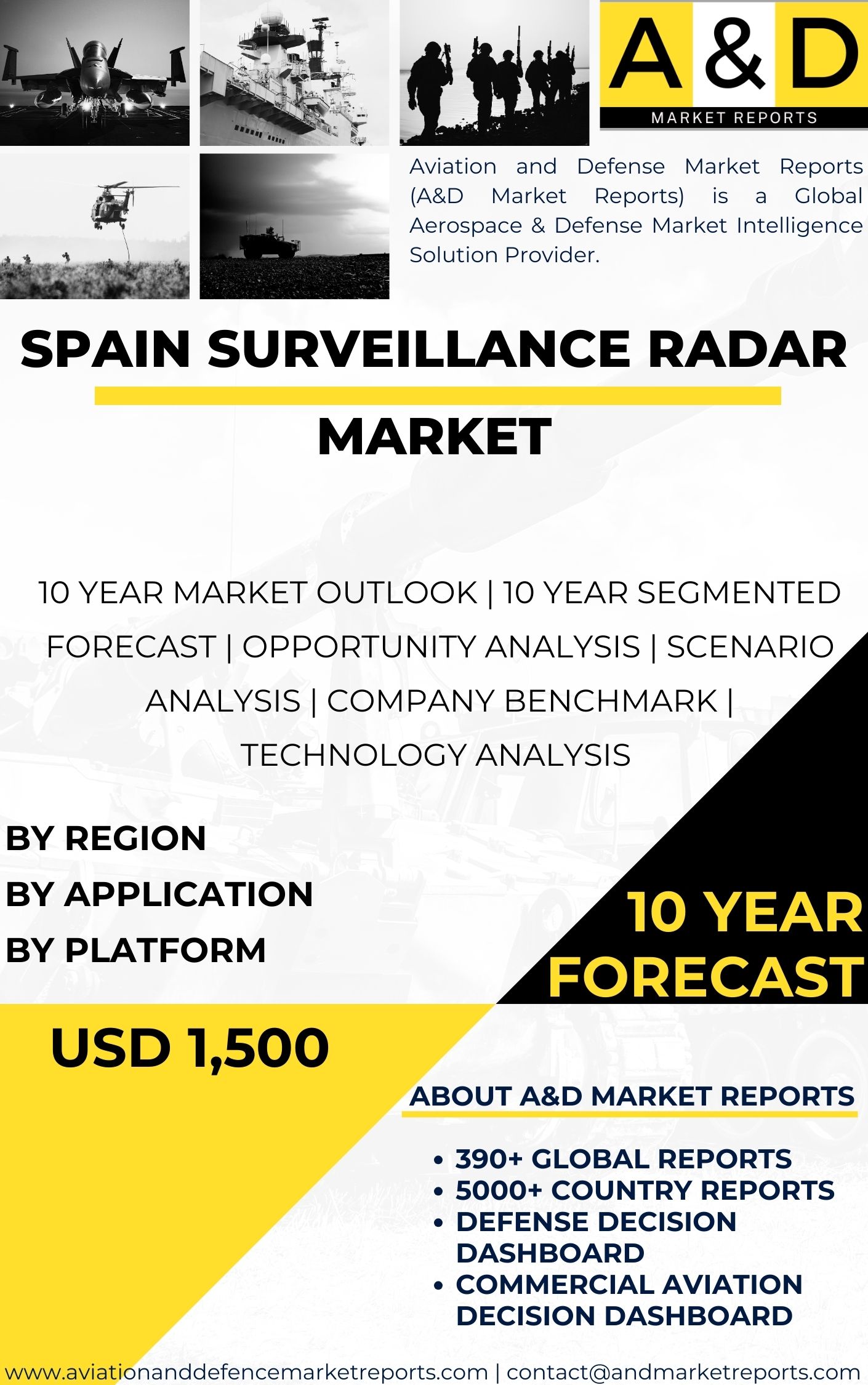
The Spain Surveillance Radar Market is a critical and rapidly evolving sector that plays a pivotal role in enhancing the country’s situational awareness, airspace security, and maritime defense capabilities. Surveillance radars are sophisticated sensors used for detecting, tracking, and monitoring objects within a specified area, providing crucial information for defense, security, and civilian applications. The market is driven by the need to modernize radar infrastructure, address emerging security threats, improve airspace management, and strengthen maritime surveillance and border control capabilities.
Growth Drivers
The growth of the Spain Surveillance Radar Market is supported by several important factors. Spain’s commitment to national security and defense modernization has increased the demand for advanced radar systems to protect airspace, territorial borders, and maritime zones. Additionally, advancements in radar technology have improved detection range, tracking accuracy, and target identification capabilities, enabling more effective responses to potential threats. The market is also influenced by rising asymmetric threats and evolving defense challenges, where surveillance radars are essential for early warning, air traffic control, and maritime monitoring operations.
Civilian and Multi-Role Applications
Surveillance radars are not limited to military use and also support a wide range of civilian applications. These systems are widely used for weather forecasting, disaster management, search and rescue missions, and border security operations. Their versatility allows deployment across ground-based, naval, and airborne platforms, making them highly adaptable for different operational environments. This multi-role capability significantly contributes to the market’s expansion and long-term importance.
Technological Advancements
Continuous technological innovation is playing a major role in the development of the Spain Surveillance Radar Market. Modern radar systems now include enhanced signal processing, digital tracking capabilities, automated threat detection, and improved integration with command and control networks. These innovations strengthen operational efficiency and provide real-time situational awareness for defense and civilian authorities alike.
Challenges and Constraints
Despite strong growth potential, the Spain Surveillance Radar Market faces several challenges. One major concern is ensuring effective radar coverage across large and diverse geographic regions, including coastal and maritime areas. Adverse weather conditions such as rain, fog, and atmospheric disturbances can also impact radar accuracy and operational performance. In addition, managing and processing large volumes of radar-generated data requires advanced analytics and integration systems. Budget constraints and the high costs associated with developing and maintaining sophisticated radar infrastructure also remain important considerations.
Regulatory and Operational Concerns
The market must also address regulatory compliance and international operational standards. Surveillance radar systems used in aviation and maritime operations must comply with strict safety and performance regulations to support international cooperation and interoperability. Ensuring secure communication networks, data integrity, and system reliability is essential for maintaining effective surveillance operations and protecting critical national infrastructure.
Future Outlook
The future of the Spain Surveillance Radar Market remains promising due to increasing investments in defense modernization and surveillance capabilities. As security threats continue to evolve and technology advances further, surveillance radars will remain a vital component of Spain’s defense and civilian monitoring infrastructure. The market is expected to witness continued innovation in radar systems, enhanced integration with digital defense networks, and broader deployment across military and civilian sectors, shaping the future of airspace security and maritime surveillance in Spain and beyond.