
Description
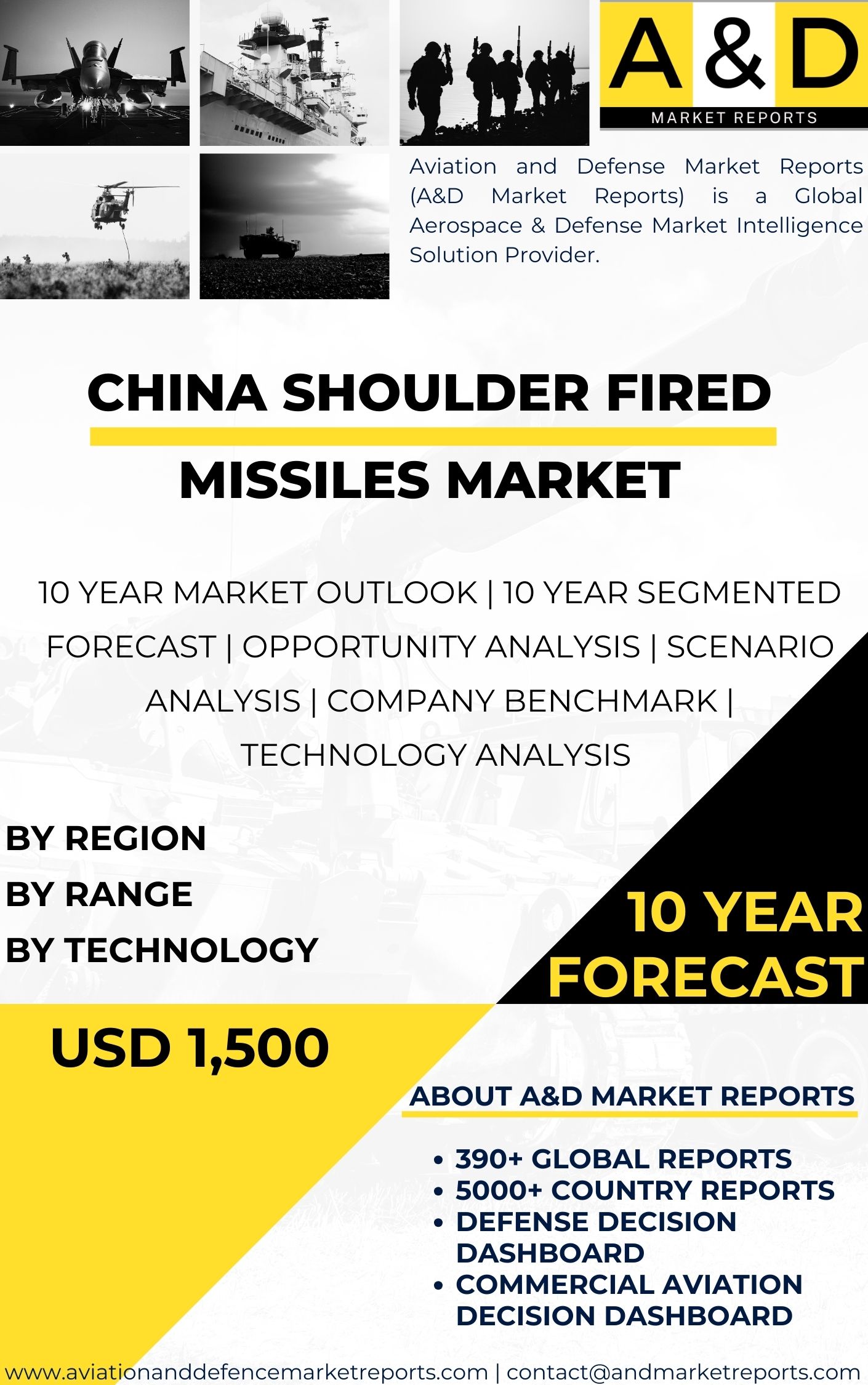
China Shoulder-Fired Missiles Market Overview
The China Shoulder Fired Missiles has seen strong growth due to rising demand for portable, high-precision, and rapidly deployable weapon systems. These missiles are widely used for anti-tank warfare, short-range air defense, and coastal or tactical strike missions. China’s focus on improving infantry mobility, battlefield responsiveness, and asymmetric warfare capability has significantly boosted the development and deployment of shoulder-fired missile systems across its armed forces.
Key Players and Industry Structure
The market is led by major domestic defense manufacturers such as Norinco Group, China Aerospace Science and Industry Corporation (CASIC), and China North Industries Group Corporation (NORINCO). These organizations are heavily involved in the design, production, and modernization of missile systems tailored for infantry and tactical units. International companies like Raytheon Technologies, Lockheed Martin, and MBDA participate mainly through indirect cooperation, technology exchange, and legacy partnerships, while domestic firms dominate operational supply.
Market Drivers
A key driver of the market is China’s military modernization strategy, which emphasizes improving ground force lethality, mobility, and flexibility. Shoulder-fired missiles provide infantry units with portable precision strike capability against armored vehicles, aircraft, and maritime targets. Increasing focus on regional security, border protection, and rapid response capability has further strengthened demand for these systems across military and paramilitary forces.
Technological Advancements
China has made notable progress in developing advanced shoulder-fired missile systems with improved guidance accuracy, range, and resistance to electronic countermeasures. Systems such as the HJ-73 anti-tank missile, FN-6 portable air defense missile, and C-704 coastal defense missile demonstrate growing indigenous capability. Modern developments also include improved seeker technologies, enhanced propulsion systems, and better targeting interfaces for improved battlefield effectiveness.
Export Potential and Global Reach
China has expanded its presence in the global defense export market by supplying cost-effective shoulder-fired missile systems to several developing countries. Through initiatives like the Belt and Road Initiative (BRI), China has strengthened defense cooperation and expanded its strategic influence. These exports are particularly attractive to nations seeking affordable yet capable missile solutions for infantry and border defense applications.
Challenges in the Market
Despite strong growth, the market faces challenges including the need to continuously upgrade missile systems to counter evolving defensive technologies such as active protection systems and electronic warfare countermeasures. Maintaining high reliability, accuracy, and safety standards is essential for both domestic use and international competitiveness. Additionally, strict export controls and geopolitical restrictions limit broader market expansion and international collaboration opportunities.
Future Outlook
The future of the China shoulder-fired missiles market is expected to be driven by advancements in guidance technology, sensor integration, and network-enabled warfare systems. Future systems are likely to feature enhanced target tracking, improved multi-role capability, and better coordination between multiple launch units. Integration of artificial intelligence and advanced seeker technologies will further increase precision and battlefield effectiveness. With sustained investment in R&D, China is expected to strengthen its position as a major global player in portable missile systems.