
Description
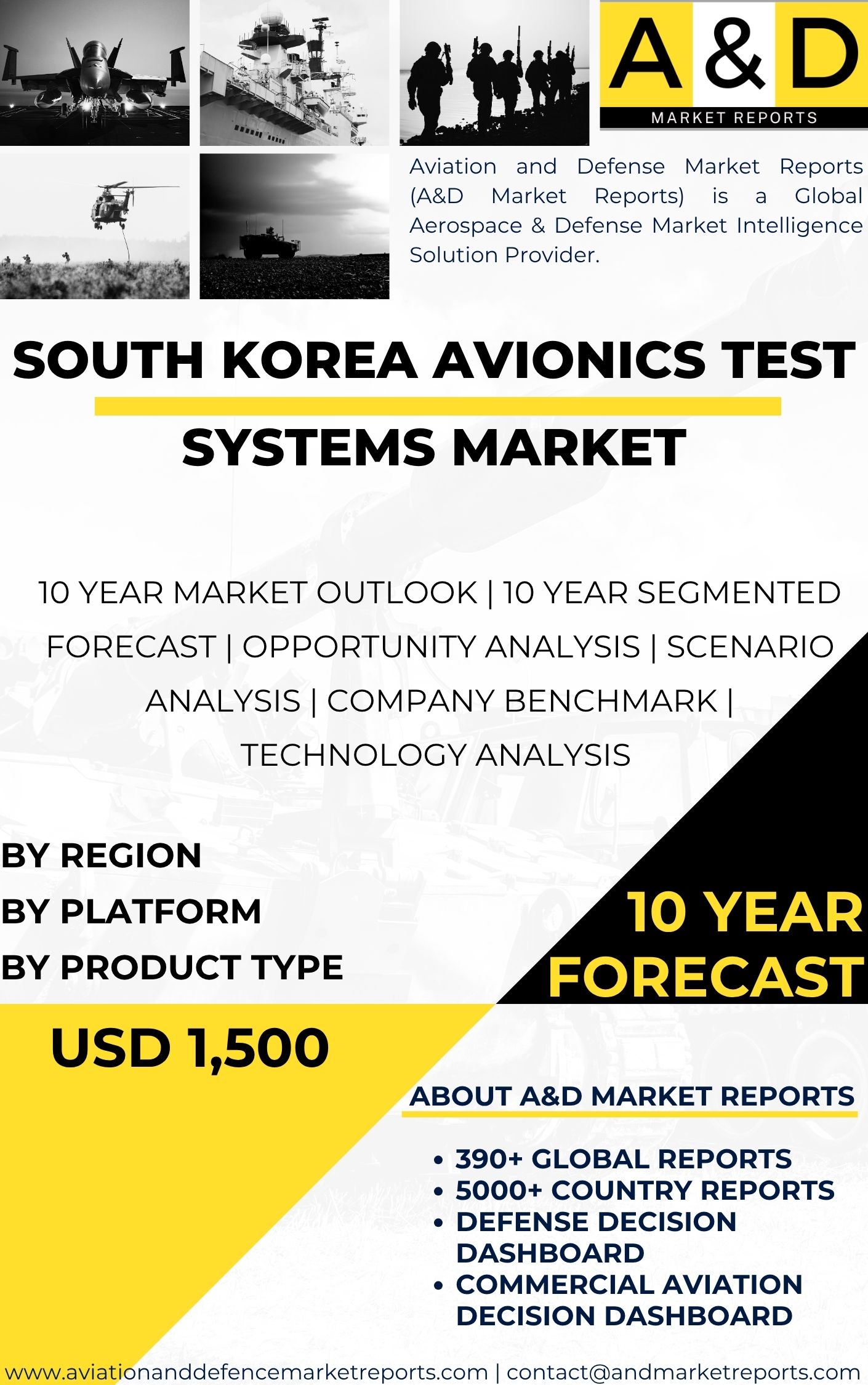
Avionics Test Systems Market in South Korea Overview
The avionics test systems market in South Korea is a technologically advanced and fast-growing segment of the aerospace and defense industry. It reflects the country’s progress in aircraft system development and maintenance. Avionics test systems play a vital role in verifying the performance, safety, and reliability of electronic systems used in modern aircraft. These systems support navigation, communication, flight control, and electronic warfare functions.
Growing Demand in South Korea’s Aerospace Sector
South Korea’s aerospace sector continues to expand rapidly, driven by strong investments in defense manufacturing, growing commercial aviation activity, and government-backed aerospace development programs. This growth is increasing the demand for advanced avionics test systems that can verify the performance, reliability, and safety of increasingly complex aircraft electronics. Aerospace manufacturers require highly accurate testing solutions to meet strict certification standards, reduce development risks, and accelerate production schedules. As aircraft become more dependent on digital systems, avionics testing has become a critical component of both manufacturing and maintenance operations.
Impact of Indigenous Aircraft Programs
Major indigenous aircraft development programs are significantly contributing to the growth of the avionics test systems market in South Korea. Projects such as the KF-21 Boramae fighter aircraft, military helicopter modernization initiatives, and the development of advanced unmanned aerial systems require sophisticated avionics validation and verification capabilities. These next-generation platforms incorporate advanced radar systems, mission computers, communication networks, and electronic warfare equipment that demand comprehensive testing. As aircraft architectures evolve, test systems must remain flexible enough to support multiple configurations and future upgrades.
Technology Trends in the Avionics Test Systems Market in South Korea
The South Korea avionics test systems market is benefiting from rapid technological advancement and increased collaboration between domestic aerospace companies and global test equipment providers. Manufacturers are investing in scalable and modular testing platforms that can support a wide range of aircraft systems throughout their lifecycle. Modern solutions increasingly feature hardware-in-the-loop (HIL) simulation, automated test sequences, real-time data acquisition, and advanced software diagnostics. These capabilities improve testing efficiency while reducing operational complexity and development time.
Role of AI and Automation
Artificial intelligence and automation technologies are transforming avionics testing processes across South Korea’s aerospace industry. AI-powered analytics help identify anomalies, optimize testing procedures, and predict potential system failures before they occur. Machine learning algorithms support predictive maintenance strategies that improve aircraft reliability and reduce unscheduled downtime. Automated testing also minimizes human error and enables faster validation of complex avionics systems. These advancements help operators maximize fleet availability while controlling maintenance and lifecycle costs.
Regulatory Influence and Digital Testing Adoption
South Korea’s aviation and defense regulatory environment encourages the adoption of digital engineering practices, simulation-based validation, and advanced testing methodologies. Digital twin technology is becoming increasingly important for modeling aircraft performance and validating avionics functionality before physical deployment. Modern avionics test systems are now integrated with aircraft lifecycle management platforms, enabling seamless data exchange and comprehensive system monitoring. These capabilities support secure communications testing, mission system verification, and electronic warfare readiness, all of which are critical for modern military operations.
Importance of Cybersecurity and Network-Centric Operations
As aircraft become increasingly connected through network-centric architectures, cybersecurity has become a major focus area within avionics testing. Test systems are now designed to evaluate secure data transmission, encryption effectiveness, and resistance to cyber threats. Military aircraft require extensive validation of communication links, mission networks, and sensor integration to ensure reliable performance in contested environments. Advanced avionics test systems help verify that aircraft can operate securely within integrated battlefield networks while maintaining mission effectiveness.
Market Challenges androwth Opportunities
Despite strong growth prospects, the avionics test systems market in South Korea faces several challenges. High development and acquisition costs can limit adoption, particularly for highly specialized testing platforms. Integrating diverse avionics subsystems from multiple suppliers also increases technical complexity. In addition, rapid technological evolution requires continuous updates to testing infrastructure and personnel skills. However, government support programs, a highly skilled engineering workforce, and strong partnerships between industry, academia, and research institutions continue to create significant growth opportunities.
Research and Development Activities
Research and development remain central to the advancement of avionics test systems in South Korea. Aerospace companies and research organizations are investing in next-generation testing technologies that improve accuracy, automation, and operational efficiency. Areas of focus include advanced simulation environments, AI-driven diagnostics, digital engineering tools, and enhanced interoperability testing. These investments support the development of increasingly capable aircraft while strengthening the domestic aerospace technology base.
Strategic Partnerships and Industry Collaboration
Strategic collaboration between aerospace manufacturers, defense contractors, technology companies, and international partners continues to accelerate innovation in the avionics test systems market. Joint development programs enable access to advanced testing methodologies and global best practices. These partnerships also facilitate technology transfer, workforce development, and the adoption of internationally recognized testing standards. Such cooperation strengthens South Korea’s position within the global aerospace supply chain.
Outlook for the Avionics Test Systems Market in South Korea
The avionics test systems market in South Korea is expected to experience sustained growth as aerospace modernization programs continue to expand. Rising demand for advanced military aircraft, commercial aviation technologies, and unmanned systems will drive the need for increasingly sophisticated testing capabilities. Continued investment in automation, digital engineering, cybersecurity, and artificial intelligence will further enhance market development. These factors support South Korea’s long-term objectives of aerospace self-reliance, defense modernization, and global competitiveness in both military and commercial aviation sectors.