
Description
South Korea Missiles and Munition Fuses Market Overview
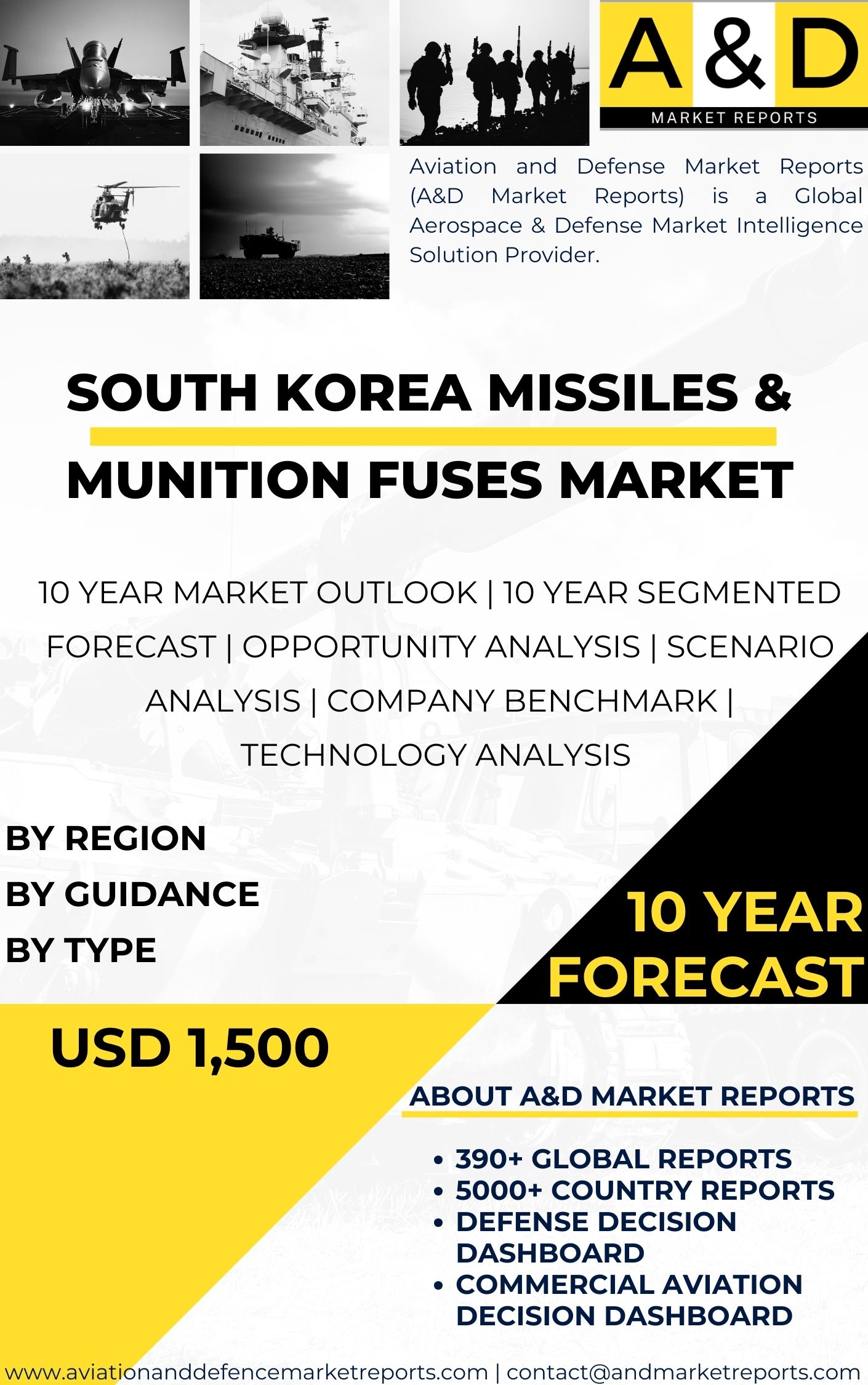
The South Korea Missiles & Munition is a critical component of the country’s defense industrial base, ensuring the safe, precise, and effective functioning of missiles and conventional munitions. Fuses are responsible for controlling detonation timing, mode, and activation conditions, which directly impact weapon accuracy, safety, and battlefield effectiveness. South Korea is actively investing in indigenous development and advanced fuse technologies to strengthen defense readiness and improve self-reliance in key weapon system components.
Importance of Fuses in Missile Systems
Missile fuses are essential for ensuring that warheads detonate at the correct moment during engagement, maximizing target impact and mission success. They are widely used across air-to-air, air-to-ground, and surface-to-surface missile systems, where precise timing determines operational effectiveness. In the South Korea missiles and munition fuses market, reliability and precision are crucial, as fuse performance directly influences the overall success of missile operations in combat scenarios.
Types of Missile Fuses
Missile fuse technologies include impact fuses, proximity fuses, and time-delay fuses, each designed to support different operational requirements and mission profiles. Impact fuses detonate upon direct contact with the target, while proximity fuses trigger when near a target for increased effectiveness. Time-delay fuses allow controlled detonation after a set period or distance, enabling optimized strike outcomes depending on mission strategy.
Munition Fuses for Conventional Ammunition
Munition fuses are widely used in artillery shells, bombs, and grenades to control detonation timing and explosion behavior. These systems ensure that munitions activate at the correct point of impact or after a specific delay, depending on battlefield requirements. The South Korea missiles and munition fuses market supports both precision-guided and conventional weapon systems, enhancing flexibility and effectiveness in various combat scenarios.
Benefits of Advanced Munition Fuses
Modern munition fuses provide significant improvements in safety, reliability, and operational control compared to traditional systems. They reduce the risk of accidental detonation while ensuring consistent and predictable performance under different environmental and combat conditions. These advancements contribute to higher combat efficiency, improved mission outcomes, and enhanced safety for military personnel during storage, transport, and deployment.
Indigenous Development in the South Korea Missiles and Munition Fuses Market
Indigenous development is a strategic priority in South Korea’s fuse market, with companies such as LIG Nex1 and Hanwha Defense leading research, design, and manufacturing efforts. This domestic capability reduces reliance on foreign suppliers while strengthening national control over critical defense technologies. It also allows for customization of fuse systems to meet specific operational requirements of South Korean armed forces.
Research and Development Activities
South Korea invests heavily in research and development to improve fuse accuracy, reliability, and resistance to extreme environmental conditions such as shock, heat, and vibration. Engineers focus on enhancing electronic components, safety mechanisms, and miniaturization to support modern weapon systems. Continuous R&D efforts ensure that fuse technologies remain aligned with evolving defense requirements and next-generation missile systems.
Strategic Partnerships and Technology Cooperation
Strategic partnerships between defense companies, research institutions, and government agencies play a key role in advancing fuse technology in South Korea. These collaborations enable technology sharing, joint development programs, and faster innovation cycles across the defense ecosystem. They also help improve system integration and ensure compatibility with both domestic and allied weapon platforms.
Testing, Quality Control, and Safety Standards
Strict testing and quality assurance processes are essential to ensure the reliability and safety of missile and munition fuses under operational conditions. Each system undergoes rigorous performance validation, environmental testing, and safety certification before deployment. These standards minimize failure risks and ensure consistent performance during storage, handling, and combat operations.
Civilian Applications of Fuse Technology
Although primarily designed for military use, certain fuse technologies are adapted for civilian applications such as mining, construction, and controlled demolition activities. These applications utilize modified detonation control systems to ensure safe and precise explosive operations. This cross-sector usage also supports broader technological development and industrial innovation.
Conclusion
The South Korea missiles and munition fuses market plays a vital role in enhancing national defense capability by ensuring reliable and precise weapon detonation systems. Through strong indigenous development, advanced research initiatives, and strategic collaboration, South Korea continues to improve fuse performance and safety. As modern warfare evolves, continued innovation in fuse technology will remain essential for maintaining operational effectiveness and defense readiness.